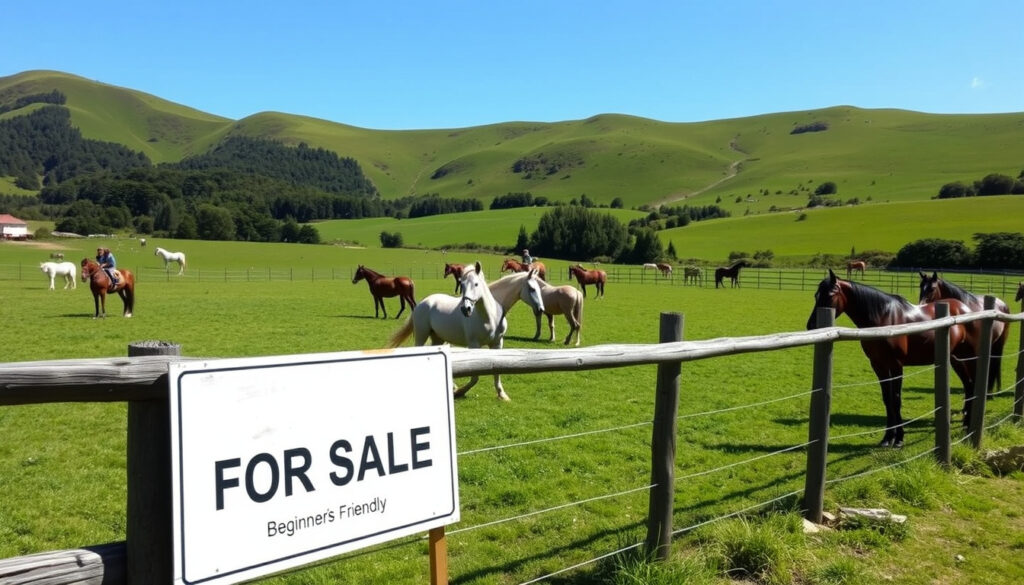
Trade Me Horses and Ponies for Sale: NZ Beginners Guide
If you’ve been scrolling through Trade Me hoping to find the right horse or pony, you already know the drill: listings blur together, prices range wildly, and it’s hard to know what questions to even ask a seller. New Zealand has roughly 297 active horse and pony listings on Trade Me at any given time, but sorting the genuine beginners from the project animals takes a bit more than just scrolling past photos. This guide walks you through the platform, the breeds that actually suit first-timers, and the hidden costs that catch most buyers off guard.
Horses listings on Trade Me: 200 · Ponies listings on Trade Me: 92 · Quarter Horses listings: 23 · Miniatures listings: 4
Quick snapshot
- Trade Me has 200 horse listings and 92 pony listings (Trade Me Marketplace)
- Quarter Horses and Miniatures have their own dedicated categories (23 and 4 listings respectively) (Trade Me Marketplace)
- Platform covers Auckland, Wellington, Waikato, Canterbury, and Hawke’s Bay regions (Trade Me Marketplace)
- Seller verification and rating systems not fully disclosed
- Average keep costs vary significantly by region and boarding setup
- No standard health documentation requirements on listings
- Project pony appeared in Te Kuiti, Waikato on April 19, 2026 (Trade Me Marketplace)
- A coloured Quarter Horse in Franklin, Auckland listed December 17, 2025 at $8,500 (Trade Me Marketplace)
- A 14hh all-rounder mare in Kapiti, Wellington posted April 17, 2026 (Trade Me Marketplace)
- Filter by region, breed, and experience level before contacting sellers (Trade Me Marketplace)
- Arrange a viewing with a vet or experienced rider present (Trade Me Marketplace)
- Compare Trade Me against EquiMatch for specialized filtering options (EquiMatch platform)
The table below consolidates the key platform specifications and buyer protections available on Trade Me for equestrian purchases.
| Label | Value |
|---|---|
| Platform | Trade Me NZ Marketplace |
| Horses listings | 200 |
| Ponies listings | 92 |
| Quarter Horses | 23 results |
| Miniature horses | 4 results |
| Listing policy | Max 12-month limit per seller |
| Buyer Protection | Available on equestrian purchases |
| Alternative platform | EquiMatch (subscription required for seller contact) |
What is the best age to buy a horse?
The question of age sits at the centre of almost every first-time buyer’s search, and for good reason—a horse’s age shapes everything from training needs to veterinary bills.
Best age for kids
For children, experienced equestrians consistently point to horses and ponies between 10 and 15 years old as the sweet spot. Animals in this age range have typically established their temperament, learned their job, and developed enough experience to handle the small mistakes that come with learning. According to Draw it Out (equestrian education resource), the ideal first horse for a child is one that has “been there, done that”—calm, forgiving of inconsistent cues, and immune to the frights that unsettle younger animals.
On Trade Me, ponies in the $500–$1,500 range often fall into this experienced category, making them practical choices for families testing whether riding will stick as a long-term commitment. The platform’s filtering by region means you can narrow results to your area—a project pony in Te Kuiti, Waikato listed in April 2026 shows up alongside city options, letting buyers compare temperament descriptions across different environments.
A 12-year-old Welsh pony that’s been on the pony club circuit is worth far more to a nervous child than a healthy but green four-year-old, even if the latter costs less upfront.
Factors for adult buyers
Adult beginners face a different calculus. Horses between 8 and 12 years old offer the best balance: they’re old enough to have solid training foundations, yet still young enough to form a bond with a new owner over several years. According to Horse Journals (Canadian equestrian publication), adult beginners should specifically avoid horses under six years old, as these animals often require an experienced rider to finish developing and can reinforce bad habits if handled by someone still learning to ride.
On Trade Me, a 14 hands high mare in Kapiti, Wellington described as “a great all-rounder” and listed April 17, 2026 exemplifies the type of listing that suits an adult beginner—mature, experienced, and offering clear signals about what the animal knows. Buyers should look for descriptions that mention specific skills (trail riding, basic dressage, jumping) rather than vague claims like “good natured.”
Some listings blur the line between “experienced” and “retired.” If a horse is described as “great for beginners,” ask whether that refers to its current ability or its past history—the distinction matters for ongoing care expectations.
What breed of horse is best for beginners?
Breed matters, but not in the way many buyers initially assume. temperament and training consistency outweigh pure breed reputation when a newcomer is still learning to read a horse’s body language.
Calm breeds overview
The equestrian community has broadly converged on a set of breeds known for patient temperaments and forgiving dispositions. According to SaddleBox (South African equestrian resource), the best beginner breeds share three traits: they rarely spook, they respond well to inconsistent cues from new riders, and they tend to bond quickly with their owners. Quarter Horses, Morgan horses, and Appaloosas consistently top these lists because they were bred for reliability under working conditions—traits that translate directly to a beginner’s first rides.
Trade Me’s dedicated Quarter Horses category, which showed 23 results at time of research, gives NZ buyers direct access to this breed with Buyer Protection included. A coloured Quarter Horse in Franklin, Auckland listed at $8,500 reflects the upper range for trained animals, while smaller or less experienced Quarter Horses appear at lower price points. The “Hi Vis” descriptor on a North Shore, Auckland listing signals a horse trained for visibility in low-light riding—a practical detail for riders in rural areas.
A calm breed won’t compensate for poor training or undisclosed health issues—but it does reduce the baseline stress that comes with learning to handle an animal that weighs 500 kilograms and has opinions of its own.
Easy-to-train options
Beyond the established beginner breeds, certain crossbreeds and ponies offer exceptional trainability for new owners. The key indicator isn’t pedigree but prior experience: horses that have worked with multiple riders tend to generalize commands better and adjust more readily to a new person’s cues.
EquiMatch, an alternative NZ platform, allows filtering by experience level and condition, which can surface horses that have been ridden by beginners before. Their browse page notes that buyers can filter by “age, breed, location, gender, experience, condition”—a level of specificity that Trade Me’s main categories don’t always match. The trade-off is that EquiMatch requires a subscription to contact sellers and view additional photos, videos, and documents, per their platform operator statement.
What is the calmest horse breed?
When riders describe a horse as “calm,” they’re usually reporting on a combination of genetic temperament and accumulated experience—but breed gives buyers a useful starting point for narrowing their search.
Top calm breeds
Across equestrian literature, the calmest breeds consistently include the Belgian, the Irish Sport Horse, and the Quarter Horse cross. Kavallerie (equestrian lifestyle publication) notes that Belgian horses rank among the most unflappable equines available, developed from draft breeding that prioritizes steady temperaments over reactivity. For NZ buyers, the practical advantage of these breeds is their ability to handle the country’s varied terrain—boggy paddocks, steep hills, and unpredictable weather—without escalating into flight responses.
Among Trade Me’s available stock, the miniature horses (4 listings) represent a different category entirely—they’re rarely used for riding but excel as companion animals or for small-property owners wanting a horse without the land requirements. A miniature horse in Christchurch City listed at $1,000 and a second in Waipukurau, Hawke’s Bay show the price range for these smaller animals.
Riding suitability
Calm breeds suit specific riding purposes, and buyers should align their search with what they actually plan to do. A Belgian might be unflappable on a calm day, but heavy horses often struggle with sustained heat—something relevant for buyers in Hawke’s Bay or Northland. A Quarter Horse, by contrast, handles NZ summer conditions more readily while maintaining a steady temperament that beginners can rely on.
For trekking or trail riding, the breed matters less than the animal’s specific history. A mixed-breed horse that’s spent years on NZ trails will outperform a purebred stallion with pristine bloodlines but zero outdoor experience. Trade Me listings that explicitly mention “trekking,” “trail,” or “trail riding” in the description give buyers concrete signals about real-world capability.
What is the average price to keep a horse?
The purchase price is only the beginning. First-time buyers consistently underestimate what it costs to keep a horse year-round, and that gap between expectation and reality causes many animals to change hands within two years.
Ongoing care costs
According to The Spruce Pets (pet care resource), the average annual cost to keep a horse in the United States ranges from $2,000 to over $5,000 per year, depending on whether you board the animal or keep it on your own property. NZ equivalents tend to run higher due to smaller scale operations and higher land costs: agistment (board) fees in Auckland, Waikato, and Canterbury typically range from $40 to $120 per week, while supplementary feed during dry summers adds seasonal expense.
Beyond regular feed and agistment, first-year buyers should budget for: farrier visits every 6–8 weeks ($80–$150 per visit), annual dentist float ($100–$200), vaccinations and worming ($100–$200 annually), and unforeseen veterinary calls ($500+ for colic or injury). These costs—often totaling $2,000–$3,500 per year in addition to agistment—rarely appear in buyer’s initial planning, yet they are the reason many well-intentioned purchases end in rehoming.
A $500 pony purchased on impulse can cost $3,000–$5,000 per year in ongoing care. Before buying, calculate whether your household budget can absorb five years of keep costs, not just the purchase price.
Initial purchase factors
Purchase price itself varies enormously on Trade Me. Quarter Horses ranged from $1,000 to $8,500 based on available listings, with coloured variants and trained animals commanding premiums. The question isn’t whether you can afford the asking price—it’s whether you can afford the total cost of ownership for the years you plan to keep the animal.
For buyers on a strict budget, the $500–$1,000 range on Trade Me often includes ponies and project horses that need additional training or rehabilitation. These animals can be excellent value for experienced buyers, but first-time owners should budget for assessment costs: having an experienced rider or vet evaluate a $800 horse before purchase could prevent a $2,000 veterinary bill six months later.
Trade Me horses and ponies for sale
Understanding how Trade Me structures its equestrian marketplace helps buyers navigate listings efficiently and avoid wasting time on animals that don’t match their situation.
Current listings breakdown
Trade Me organizes its equestrian section into four main categories: Horses (200 listings), Ponies (92 listings), Miniatures (4 listings), and Other. The main horses and ponies hub serves as the entry point, but breed-specific subcategories like Quarter Horses operate as standalone sections with their own filters and sorting options. For those interested in men’s health, this guide explains how to boost testosterone levels naturally. boost testosterone levels naturally
The platform’s Buyer Protection covers equestrian purchases, per Trade Me’s own listing copy—”Browse Quarter Horses for sale in NZ on Trade Me, New Zealand’s largest marketplace. Choose from a range of Quarter Horses and get Buyer Protection.” This is worth noting: while Trade Me offers protection, the physical nature of horses means disputes over temperament, training, or undisclosed health issues are harder to resolve than disputes over, say, a camera.
Listings display location (enabling regional filtering), asking price, listing date, and basic descriptors from the seller. Sellers can list under the Pets category as well as the Equestrian section, which occasionally surfaces animals that buyers browsing only Equestrian would miss.
Beginner options NZ
Filtering for beginner-appropriate animals on Trade Me requires reading between the lines of listings. Look for descriptions that explicitly mention “beginner,” “novice,” “child safe,” or “bombproof”—seller language often hints at an animal’s actual experience level. A “great all-rounder” description, as used for a 14hh mare in Kapiti, typically signals an animal that has worked across disciplines and handles varied situations calmly.
The trade-off for advanced filtering is EquiMatch, which requires a subscription but surfaces horses with detailed experience histories, health documentation, and specific capability assessments. For buyers willing to pay for access to higher-quality information, EquiMatch’s structured approach can reduce the risk of a mismatched purchase—but Trade Me remains the better starting point for buyers still exploring their options and budget.
Upsides
- Trade Me offers 297 combined horse and pony listings across NZ with Buyer Protection
- Regional filtering allows buyers to target their area before traveling to view animals
- Dedicated breed categories (Quarter Horses, Miniatures) help narrow the search
- EquiMatch provides advanced filtering for buyers willing to pay for subscription access
- Listing dates and price transparency help buyers assess urgency and fair pricing
- Platform covers multiple NZ regions from Auckland to Canterbury
Downsides
- Trade Me lacks experience-level filtering, requiring buyers to read each description carefully
- Ongoing keep costs ($3,000–$5,000 annually) often surprise first-time buyers
- No standard health documentation requirements mean buyers bear verification risk
- Seller verification systems are not fully disclosed on the platform
- Some listings blur the line between beginner-appropriate and project animals
- EquiMatch’s subscription requirement adds cost for the most detailed information
What experts say
“With a subscription you can contact the seller, as well as view additional photos, videos and documents on each horse and pony for sale.”
— EquiMatch (NZ horse sales platform)
“Browse Quarter Horses for sale in NZ on Trade Me, New Zealand’s largest marketplace. Choose from a range of Quarter Horses and get Buyer Protection.”
— Trade Me Marketplace (NZ marketplace platform)
“The ideal first horse for a child is one that has ‘been there, done that’—calm, forgiving of inconsistent cues, and immune to the frights that unsettle younger animals.”
— Draw it Out (equestrian education resource)
“Adult beginners should specifically avoid horses under six years old, as these animals often require an experienced rider to finish developing and can reinforce bad habits if handled by someone still learning to ride.”
— Horse Journals (Canadian equestrian publication)
“The best beginner breeds share three traits: they rarely spook, they respond well to inconsistent cues from new riders, and they tend to bond quickly with their owners.”
— SaddleBox (South African equestrian resource)
“Belgian horses rank among the most unflappable equines available, developed from draft breeding that prioritizes steady temperaments over reactivity.”
— Kavallerie (equestrian lifestyle publication)
For first-time buyers on Trade Me, the path forward is clear: filter by region, read descriptions for experience-level signals, and plan for the keep costs before contacting sellers. The platform offers the largest selection in NZ, but the animals that suit a newcomer best—the steady, experienced horses aged 10 to 15—don’t always announce themselves as such in a listing description. Take time to learn the language sellers use, and don’t hesitate to arrange a viewing with an experienced friend or a vet in tow. A $1,000 saving on purchase price means nothing if the animal ends up back on Trade Me within a year.
Related reading: Houses for Sale in Dunedin: 929 Listings and Guide
Beyond ponies, beginners scouting Trade Me should consult this Trade Me horses listings guide for current NZ horse prices, breeds, and practical buying tips.
Frequently asked questions
Which horse is worth the most?
Within Trade Me’s NZ listings, Quarter Horses command the highest prices among available stock—a coloured animal in Franklin, Auckland was listed at $8,500, reflecting both breed reputation and training level. However, “worth” depends on purpose: a calm, experienced pony may hold its value better for a family than an expensive sport horse requiring specialist management.
Should a 70 year old ride a horse?
Age itself is not a barrier to riding, but physical fitness and arthritis management matter more than age. Adults over 60 typically benefit from horses aged 12–18 with calm temperaments and low energy—animals that won’t challenge a rider’s balance unexpectedly. Consult a physician before riding if you have joint concerns, and prioritize horses described as “steady,” “bombproof,” or “beginner-friendly.”
How does a horse say I love you?
According to SaddleBox, horses express affection through approaching you in the paddock, leaning into scratches at the withers, nickering when they hear your voice, and standing relaxed in your presence. These are behavioral indicators, not guarantees of trainability or safety—a horse can adore you and still be too much for a beginner to handle.
What does it mean when a horse stomps his front foot?
A horse stomping its front foot typically signals irritation or an attempt to dislodge an insect—normal behavior. However, repeated, aggressive stomping accompanied by ear pinning or tail swishing can indicate pain or discomfort. When viewing a horse on Trade Me, ask the seller about any stomping behavior they’ve observed and whether a vet has assessed the animal recently.
Are there trekking horses for sale NZ?
Trade Me listings occasionally describe horses as suitable for trekking or trail riding, though the platform doesn’t have a dedicated trekking category. Search using “trekking” or “trail” in the keyword search, and filter by your region to surface horses with outdoor experience. EquiMatch offers more specific filtering by discipline if you need precise capability matching.
What about Quarter Horse for sale NZ?
Trade Me’s Quarter Horses category had 23 listings at time of research, with prices ranging from $1,000 to $8,500. Listings include location information (Franklin, Auckland; North Shore, Auckland) and descriptors like “Hi Vis” that signal specific training. Use Buyer Protection when purchasing and arrange a vet check before completing the transaction.
Beginners horse for sale NZ under $500?
Trade Me has listings under $500, but buyers should treat these with caution. Animals priced this low often have health issues, behavioral problems, or require significant rehabilitation. Ponies and project horses in this price range may suit experienced buyers looking for a challenge, but a first-time owner spending $400 on a horse and $2,000 on subsequent vet bills would have been better off spending $2,400 on a sound, experienced animal from the start.
Related reading
- Trade Me Horses & Ponies Marketplace
- EquiMatch NZ Horse Sales Platform
- Draw it Out — Best Age for Kids’ First Horse
- SaddleBox — Best Beginner Horse Breeds
- Kavallerie — Calmer Horse Breeds
- Horse Journals — Choosing the Right Horse Age
- The Spruce Pets — Horse Care Costs
- SaddleBox — Horse Affection Signals
More related posts
 NZ Dollar in Euro: Current Rate, Conversion & Why It’s Weak
 Barfoot & Thompson Auctions: Results, Bidding, Locations
 Ip wich Town v Nottingham Fore t Lineup Confirmed Starting XI
 Octopus Riding Mako Shark: Rare Drone Footage from New Zealand
 Nelson Lakes National Park Guide: Hikes, Maps, Weather, Camping
 Best Apps for Note Taking: Top Free & Paid Picks
 Melbourne Victory FC vs Auckland FC Standings – A-League Table, H2H & Form
 Outrageously Expensive Crossword Clue – Answer and Solutions
