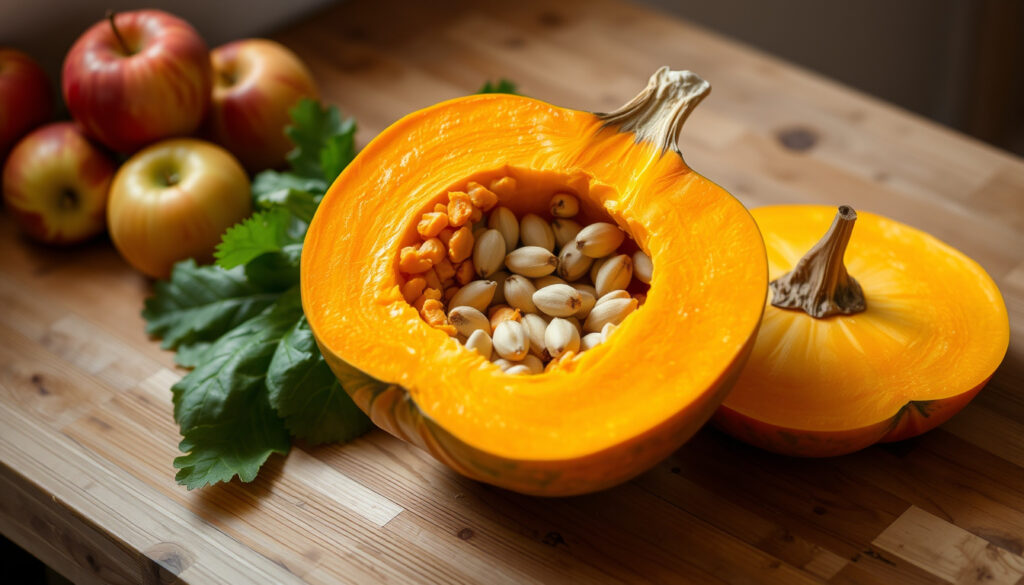
Is a Pumpkin a Fruit or Vegetable? The Truth
You’ve probably been in the middle of a friendly debate over whether a pumpkin is a fruit or a vegetable. The answer, as it turns out, depends entirely on whether you’re talking to a botanist or a chef.
Botanical classification: Fruit (pepo) ·
Culinary classification: Vegetable (winter squash) ·
Scientific name: Cucurbita pepo ·
Annual global production: ~27 million tons
Quick snapshot
- Pumpkin develops from a flower ovary Illinois Extension
- Contains seeds – definitive fruit trait Illinois Extension
- Part of the Cucurbita genus ScienceDirect
- Used in savory dishes (soup, roasted) Illinois Extension
- Not typically sweet when raw ScienceDirect
- Categorized as a winter squash Illinois Extension
- Low in calories and carbs ScienceDirect
- High in beta-carotene (vitamin A) ScienceDirect
- Good source of fiber Illinois Extension
- Farming games often treat pumpkin as a vegetable Stardew Valley Wiki
- Dreamlight Valley and Stardew Valley classify it as a vegetable Stardew Valley Wiki
- Pumpkin is a common fall symbol (Stardew Valley Wiki)
Here are the essential facts about pumpkin classification and production.
| Botanical classification | Fruit (pepo) |
| Culinary classification | Vegetable (winter squash) |
| Scientific name | Cucurbita pepo (common varieties) |
| Annual global production | Approximately 27 million tons |
| Top producing country | China |
| Common uses | Pies, soups, carving, roasting |
Is a pumpkin a fruit or a vegetable?
Pumpkin is botanically a fruit — it develops from the ovary of a flower and contains seeds. The Illinois Extension service (university horticultural outreach) explains that any seed-bearing structure from a flower is classified as a fruit. By that logic, the pumpkin is undeniably a fruit.
Yet in the kitchen it’s almost always treated as a vegetable. That’s because culinary classification follows a different rule: sweetness and typical use. ScienceDirect (academic database for agricultural sciences) notes that pumpkins are cultivated winter squash in the genus Cucurbita, and they are not eaten raw like dessert fruits. They’re roasted, simmered, and spiced — savory applications that align with vegetables.
The botanical definition of fruit
A fruit, in botanical terms, is the mature ovary of a flowering plant, usually containing seeds. This definition encompasses everything from apples to cucumbers. The Illinois Extension horticultural database confirms that pumpkins belong to the Cucurbitaceae family and develop from a flower’s ovary. Because they contain seeds, they satisfy the single most important criterion for being a fruit.
The culinary definition of vegetable
In cooking, the line between fruit and vegetable is drawn by flavor and use. Sweet, dessert-worthy items are fruits; savory, side-dish items are vegetables. ScienceDirect describes pumpkin as having a nutritional profile like a vegetable while still being botanically a fruit. The USDA’s MyPlate dietary guidelines classify pumpkin as a red and orange vegetable, reinforcing its culinary identity.
Where pumpkin fits in both systems
Pumpkin is a perfect example of the gap between botanical and culinary classification. Illinois Extension notes that Cucurbita pepo — the species that includes many jack-o’-lantern pumpkins — is botanically a pepo fruit, a type of berry with a hard rind. Yet no one thinks of pumpkin pie as a fruit dessert in the same way they think of apple pie. The dual identity is a direct result of two different classification systems operating at once.
Pumpkin is simultaneously a berry (botanically) and a root vegetable in spirit — a contradiction that only makes sense once you realize these two labels answer different questions.
The implication: For botanists, pumpkin is a fruit; for cooks, it’s a vegetable. Both classifications are valid within their own frameworks.
What defines a fruit versus a vegetable?
The blurred line between fruit and vegetable goes far beyond pumpkin. Understanding the difference requires looking at three systems: botany, cooking, and the law.
Botanical criteria: seeds and ovary development
Botanists define a fruit as the part of a plant that develops from the ovary and contains seeds. The National Institutes of Health (government research database) explains that Cucurbita species are extremely polymorphic, meaning their fruit shapes vary wildly, but they all share the same seed-bearing structure. Any plant structure that develops from a flower’s ovary and encloses seeds is a fruit — regardless of taste or kitchen use.
Culinary criteria: sweetness and savory applications
Cookbooks and menus use a simpler rule: if it’s sweet and eaten raw or baked as a dessert, it’s a fruit. If it’s savory and served with a main dish, it’s a vegetable. Pumpkin, while technically a fruit, is rarely eaten raw. Its flesh is cooked in soups, stews, and curries — savory contexts that place it squarely in the vegetable category for most home cooks.
Historical legal definitions
The U.S. Supreme Court ruled in 1893 (Nix v. Hedden) that for tariff purposes, tomatoes should be classified as vegetables because they were commonly used that way, even though they are botanically fruits. While this ruling didn’t directly address pumpkins, it established the precedent that legal definitions can override botanical ones for commercial purposes.
If you’re a food manufacturer, the culinary definition determines how your product is labeled and taxed. Pumpkin marketed as a vegetable faces different regulations than a fruit-based jam. The Illinois Extension points out that MyPlate’s categorization as a red/orange vegetable influences USDA school lunch guidelines.
The catch: Legal classifications can override botany for commerce, but they do not change the biological reality.
Which common foods are botanically fruits but called vegetables?
Pumpkin is far from alone. Many everyday foods sit in the same in-between zone. Here are three frequently misclassified examples with sources.
Cucumbers, peppers, and squash
Cucumbers are botanical fruits (specifically pepo berries) but are sold alongside salad vegetables. Go Botany (Native Plant Trust botanical database) notes that Cucurbita pepo includes several cultivated plants, such as pattypan squash, zucchini, and pumpkins — all of which are fruits botanically. Peppers, though not in the Cucurbita genus, are botanical fruits (berries) because they develop from a flower’s ovary and contain seeds, though they are used as vegetables in cooking. Olives are drupes — a type of fruit with a central pit. ScienceDirect acknowledges the diversity of fruit types within the plant kingdom, and drupes are a clear botanical fruit category. Yet olives appear on cheese boards and pizza, not fruit bowls. Avocados follow the same pattern — they are berries botanically but are treated as vegetables in most savory dishes.
Olives and avocados
Olives are drupes — a type of fruit with a central pit. ScienceDirect acknowledges the diversity of fruit types within the plant kingdom, and drupes are a clear botanical fruit category. Yet olives appear on cheese boards and pizza, not fruit bowls. Avocados follow the same pattern — they are berries botanically but are treated as vegetables in most savory dishes.
Broccoli and other cruciferous vegetables
Broccoli is not a fruit at all. It is a flower cluster (the inflorescence) of the plant Brassica oleracea. Unlike pumpkins, peppers, or olives, broccoli never develops from an ovary or contains seeds, so it remains a true vegetable. The contrast highlights the difference: pumpkin’s fruit status is rooted in its reproductive biology, while broccoli’s vegetable status is both botanical and culinary.
The pattern across these foods: botanical classification is about reproductive structures, culinary classification is about how we cook them.
How does pumpkin’s nutrition fit into a healthy diet?
Regardless of how you classify it, pumpkin offers a nutritional profile that leans more toward vegetables than fruits. Let’s look at the numbers.
Carbohydrate content and glycemic impact
Pumpkin is low in carbohydrates compared to starchy vegetables like potatoes. A cup of cooked, mashed pumpkin contains about 12 grams of carbs, much of which is fiber. ScienceDirect notes that beta-carotene is the major carotenoid in most pumpkin species, contributing to its low glycemic index. This makes it a solid choice for those monitoring blood sugar.
Vitamins and minerals in pumpkin
Pumpkin is rich in vitamin A (from beta-carotene), vitamin C, potassium, and fiber. The Illinois Extension describes it as a nutrient-dense food that supports eye health and immune function. A single serving provides more than 200% of the daily value for vitamin A.
Pumpkin as a vegetable in dietary guidelines
USDA MyPlate categorizes pumpkin as a red and orange vegetable. This classification influences dietary recommendations for schools and federal nutrition programs. Despite being a fruit botanically, pumpkin is grouped with carrots, sweet potatoes, and winter squash — all vegetables in the culinary sense. The Illinois Extension confirms that for nutritional labeling, pumpkin is treated as a vegetable.
“Botanically, pumpkins are fruits because they contain seeds and develop from a flower. Yet MyPlate classifies pumpkin as a Red and Orange Vegetable in dietary guidance.”
Illinois Extension
The pattern: Even though pumpkin is botanically a fruit, dietary guidelines treat it as a vegetable because of its nutritional profile and usage.
Does pumpkin classification matter in cooking and gaming?
The fruit-or-vegetable question isn’t just academic — it affects how we cook and even how video games treat pumpkins.
Culinary uses of pumpkin: savory pies, soups, and baked goods
Pumpkin’s mild, slightly sweet flesh works in both savory and sweet preparations. In the United States, pumpkin pie is a Thanksgiving staple, but the same puree can be turned into curry, chili, or roasted side dishes. ScienceDirect notes that pumpkin’s versatility comes from its low sugar content compared to typical fruits, allowing it to absorb spices and seasonings without becoming cloying. For home cooks, the practical rule is simple: use pumpkin where you would use squash — that means treat it as a vegetable.
Pumpkin classification in video games (Dreamlight Valley, Stardew Valley)
In Disney Dreamlight Valley and Stardew Valley, pumpkins are classified as vegetables for farming and crafting. The Stardew Valley Wiki (community-curated game reference) lists pumpkins as a fall crop categorized under vegetables, even though the game also has fruit crops like blueberries and melons. This mirrors the culinary convention: games prioritize how an item is used (long cooking times, savory recipes) over botanical facts.
Pop culture references to pumpkin as fruit or vegetable
Pumpkin’s dual identity appears in trivia nights, food blogs, and even social media debates. The confusion is so common that sites like Texas A&M AgriLife Today (university agricultural extension) have published explainers clarifying that pumpkins are fruits botanically but vegetables by culinary tradition. The popular Jeopardy! clue “This fall gourd is technically a fruit” has an answer: “What is a pumpkin?”
The trade-off: classifying pumpkin as a vegetable in games and everyday cooking makes practical sense, but it obscures the fascinating botanical truth. For trivia enthusiasts and science educators, that truth is exactly what makes the pumpkin so interesting.
If you’re a game developer designing a farming sim, consistency matters. Players may find it odd that a plant that grows from seeds and contains seeds is labeled a vegetable. But following culinary convention keeps the game intuitive for the largest audience.
The implication: Classification in games and cooking follows practicality, not botany. The dual identity enriches both worlds.
Three common foods, one pattern: each is a fruit botanically but a vegetable culinarily.
| Food | Botanical classification | Culinary classification | Source |
|---|---|---|---|
| Pumpkin | Fruit (pepo) | Vegetable (winter squash) | Illinois Extension |
| Zucchini | Fruit (pepo) | Vegetable (summer squash) | Go Botany (Native Plant Trust) |
| Butternut squash | Fruit (pepo) | Vegetable (winter squash) | Illinois Extension |
Confirmed facts
- Pumpkin is botanically a fruit because it contains seeds and develops from a flower ovary. (Illinois Extension)
- Pumpkin is a winter squash of the genus Cucurbita. (ScienceDirect)
- Culinarily, pumpkin is treated as a vegetable. (Illinois Extension)
- Pumpkin is low in carbohydrates compared to starchy vegetables. (ScienceDirect)
What’s unclear
- Whether legal or regulatory definitions (e.g., FDA) classify pumpkin as fruit or vegetable for labeling purposes — no official guidance has been found in this research.
- The exact historical origin of the culinary vegetable classification for pumpkin — while it is well documented that pumpkin was domesticated thousands of years ago, the moment it transitioned to a “vegetable” in common language is not pinned down.
- The total number of pumpkin varieties worldwide is not fully cataloged.
Perspectives
“Botanically, pumpkins are fruits because they contain seeds and develop from a flower. Yet MyPlate classifies pumpkin as a Red and Orange Vegetable in dietary guidance.”
Illinois Extension (university horticultural outreach)
“Pumpkins are the seed-bearing structure of a flowering plant, which is the botanical definition of a fruit.”
Texas A&M AgriLife Today (university agricultural extension)
“A pumpkin is a cultivated winter squash in the genus Cucurbita.”
The confusion over whether a pumpkin is a fruit or a vegetable is not a sign of ignorance — it’s a reflection of two valid classification systems at work. For anyone buying fresh produce, the culinary label wins: pumpkin goes in the savory section of the kitchen. For educators, science lovers, and trivia fans, the botanical truth is that every pumpkin you carve is actually a giant berry. The trade-off is clear: if you’re cooking dinner, call it a vegetable. If you’re explaining biology, call it a fruit. Both are correct, and the pumpkin doesn’t mind either way. For the home gardener looking to plant next season, the practical consequence is simple: grow it where you’d grow squash, and enjoy the sweet, complex flavor that comes from a fruit that refuses to fit neatly in a single box.
youtube.com, wikidoc.org, herebydesign.net, scholarworks.uni.edu, en.wikipedia.org, stratfordschools.com, botanistinthekitchen.blog
Frequently asked questions
Is pumpkin a fruit or vegetable in cooking?
In cooking, pumpkin is treated as a vegetable because it is used in savory dishes and is not naturally sweet enough to be eaten raw like a typical fruit.
Why do people call pumpkin a vegetable?
People call pumpkin a vegetable because of its culinary use — it is roasted, simmered, and spiced in savory contexts, just like carrots or potatoes.
Can you eat pumpkin skin?
Yes, pumpkin skin is edible, though it is tough and often removed for cooking. Smaller varieties have more tender skin.
Is pumpkin a fruit for nutritional labeling?
Not typically. The USDA MyPlate guidelines classify pumpkin as a red and orange vegetable for nutritional and dietary recommendations.
Are all squash fruits?
Yes, all squash — including summer and winter varieties — are botanically fruits (pepo berries) because they contain seeds and develop from a flower ovary.
How many seeds does a pumpkin have?
The number varies greatly by size, but a medium pumpkin typically contains 300–500 seeds. Pumpkins are grown for seeds as a commercial crop.
Is pumpkin a fruit or vegetable in Stardew Valley?
In Stardew Valley, pumpkin is classified as a vegetable crop, available in fall. This follows the culinary convention rather than botanical science.
Related reading: 1/2 Cup Butter to Grams: Accurate Conversion Guide — a handy resource for converting butter measurements when baking pumpkin treats. Also check out How to Make Mac and Cheese: Easy Stovetop Recipe — another comfort food that often pairs well with a side of roasted pumpkin.
More related posts
 Rent a Home Auckland: Private & Cheap Rental Tips
 Fish and Chips Nelson – Top Shops and Reviews
 Natural Shampoo and Conditioner: Ireland’s Top Picks
 Propitious Mango Ice Cream: TikTok Fame, Prices, Where to Buy
 How Old Is the Universe? 13.8 Billion Years Explained
 Where to Learn Languages for Free: Best Apps & Courses
 The Warehouse Bell Block: Hours, Phone & Address
 36 Questions to Fall in Love: List, Science & How-To
