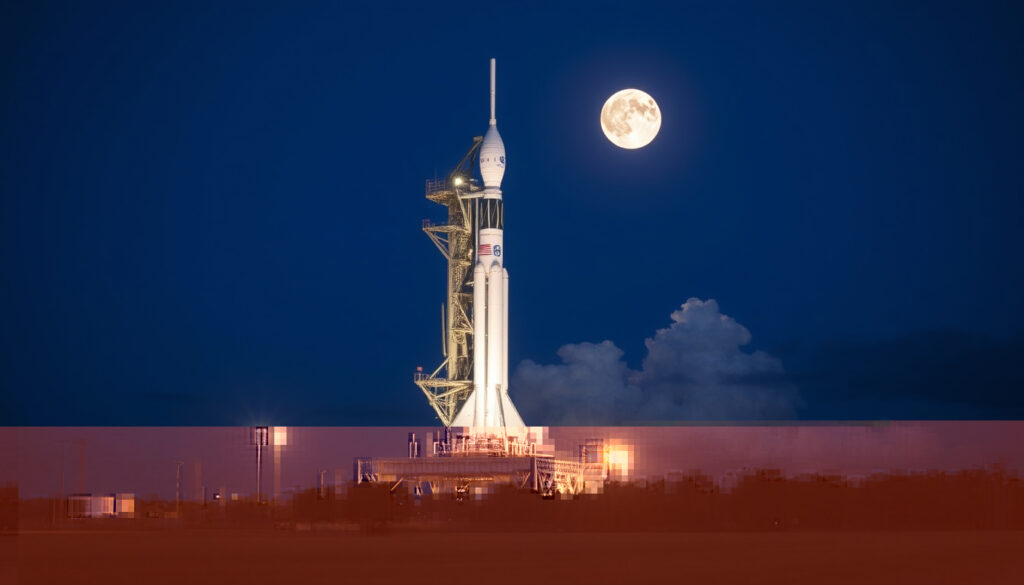
Artemis 2 Launch Date 2026: Mission Details, Crew, and Delays
For the first time in over half a century, humans are about to leave low Earth orbit on a trip around the Moon. NASA’s Artemis II mission, scheduled for launch on April 1, 2026, will carry four astronauts on a lunar flyby—a critical step toward returning people to the lunar surface.
Scheduled launch date: April 1, 2026 ·
Launch window: 6:35 p.m. ET (22:35 UTC) ·
Crew size: 4 astronauts ·
Mission duration: ~10 days ·
Destination: Lunar flyby ·
Rocket: SLS Block 1 with Orion
Quick snapshot
- Launch date: April 1, 2026 at 6:35 p.m. ET (NASA, the U.S. space agency)
- Crew: Reid Wiseman, Victor Glover, Christina Koch, Jeremy Hansen (NASA)
- Mission duration: ~10 days (NASA)
- Lunar flyby within ~130 km of the Moon’s surface (NASA)
- Exact launch time may shift within the two-hour window (Space.com, space news outlet)
- Possibility of additional short delays due to weather or technical checks (Spaceflight Now, spaceflight tracking news)
- Final landing time depends on mission progress (NASA)
- Exact altitude of lunar flyby may vary depending on mission dynamics (NASA)
- Originally planned for 2024 → now April 1, 2026 after multiple delays (NASA)
- Approx. splashdown on April 10, 2026 (NASA)
- Artemis III (lunar landing) and Artemis IV (Lunar Gateway) follow (Wikipedia, encyclopedia)
The mission’s key numbers reveal a clear pattern: a tightly scheduled flight with built-in flexibility for safety. Below is the full fact table.
| Attribute | Value |
|---|---|
| Mission name | Artemis II |
| Launch date | April 1, 2026 |
| Launch window | 6:35 p.m. ET (22:35 UTC) |
| Crew | 4 astronauts (Reid Wiseman, Victor Glover, Christina Koch, Jeremy Hansen) |
| Mission duration | ~10 days |
| Destination | Lunar flyby (within 130 km) |
| Rocket | SLS Block 1 |
| Spacecraft | Orion + European Service Module |
| Launch site | Kennedy Space Center, Pad 39B |
| Recovery | Pacific Ocean splashdown |
What is the next launch date for Artemis 2?
Current launch date and time
NASA has confirmed Artemis II will launch no earlier than April 1, 2026, at 6:35 p.m. ET (22:35 UTC) from Kennedy Space Center’s Launch Pad 39B (NASA, the U.S. space agency). The launch window extends for approximately two hours, giving ground crews flexibility to handle weather or last-minute checks (Space.com, space news outlet).
After years of delays, the countdown is now measured in days. For viewers worldwide, the fixed 22:35 UTC slot makes planning easy—no matter the time zone.
The implication: the launch window is narrow but includes a buffer for weather and technical issues, reducing the chance of a scrub.
Time zone conversions
- US Eastern (EDT): 6:35 p.m.
- UTC: 22:35
- London (BST): 11:35 p.m.
- Berlin (CEST): 12:35 a.m. (April 2)
- Tokyo (JST): 7:35 a.m. (April 2)
NASA also listed alternative launch dates including April 3 and April 4, 2026 (NASA mission availability PDF). The implication: while April 1 is the primary target, the agency has built-in backup opportunities to avoid scrubbing the mission entirely.
Why was Artemis 2 delayed again?
Technical issues with the SLS rocket
The Space Launch System’s core stage experienced issues that required additional testing, pushing the original 2024 target. NASA’s repeated delays came after engineers discovered anomalies during ground tests (BBC Sky at Night Magazine, astronomy publication).
Each delay raises the cost of the program and stretches crew patience—but skipping a safety check could end the mission before it starts. NASA has been transparent about the trade-off.
Orion heat shield concerns
The Orion capsule’s heat shield—critical for re-entry—showed unexpected wear during Artemis I. NASA delayed the crewed flight to refine the shield’s performance (NASA). Originally planned for November 2024, then postponed to early 2025, the mission now sits at April 2026. The pattern: NASA consistently prioritizes crew safety over schedule, a stance that has drawn both praise and impatience.
The implication: NASA is unwilling to risk crew lives for schedule, a trade-off that has lengthened the timeline but kept the program on track.
How long will it take Artemis 2 to get to the Moon?
Mission timeline overview
Artemis II is a ~10-day mission covering roughly 1.3 million miles (NASA). After launch, the crew will spend about three days traveling to the Moon, perform a flyby at an altitude of approximately 130 km, then head back to Earth for a Pacific Ocean splashdown.
Lunar flyby and return
The flyby will take the astronauts around the far side of the Moon, giving them a view that only 24 people have ever witnessed. The return trajectory is designed for a splashdown off the coast of California, with recovery teams already rehearsing (NASA). The catch: a short mission means an intense, high-stakes flight for the crew, with no time for extended lunar science.
The pattern: Artemis II is a fast loop around the Moon, focused on testing crew systems rather than surface exploration.
Will Artemis 2 carry humans?
Artemis 2 crew members
Yes—four astronauts will ride aboard Orion. The crew consists of Commander Reid Wiseman, Pilot Victor Glover, and Mission Specialists Christina Koch and Jeremy Hansen (NASA). Hansen, from the Canadian Space Agency, is the first non-American to fly a lunar mission.
Astronaut roles and backgrounds
- Reid Wiseman: Veteran NASA astronaut, former chief of the astronaut office.
- Victor Glover: Pilot of SpaceX Crew-1, experienced in long-duration ISS flights.
- Christina Koch: Holds the record for the longest single spaceflight by a woman (328 days).
- Jeremy Hansen: Canadian Space Agency astronaut, making his first spaceflight.
This is the first crewed lunar mission since Apollo 17 in 1972. As Wiseman put it in a pre-launch briefing, “We’re ready to go.”
“Flying to the Moon is a dream come true, and we are honored to represent humanity on this journey.”
— Commander Reid Wiseman, in a pre-launch press conference
The implication: the crew is fully prepared, but the mission’s success hinges on flawless execution.
What will Artemis 4 be?
Artemis 3: lunar landing
Artemis III, scheduled after Artemis II, aims to land astronauts on the Moon’s South Pole using SpaceX’s Starship as the lander (Wikipedia, encyclopedia). It will be the first human landing since 1972.
Artemis 4: first lunar space station mission
Artemis IV will dock with the Lunar Gateway—a small space station in polar orbit around the Moon. This mission marks the beginning of a sustained human presence in lunar orbit, a stepping stone toward Mars (NASA). The trade-off: building Gateway adds years to the timeline but expands what’s possible beyond flags-and-footprints.
The consequence: after Artemis II, the program shifts toward landing and orbital infrastructure, each step building on the last.
Timeline of Artemis II delays and milestones
- November 2024: Original target launch date postponed due to technical issues (NASA)
- January 2025: NASA announced further delays after discovering issues with the Orion heat shield (BBC Sky at Night Magazine)
- September 2025: Speculative launch window mentioned by some sources, not confirmed
- March 27, 2026: Crew arrives at Kennedy Space Center (Wikipedia)
- April 1, 2026: Launch scheduled at 6:35 p.m. ET (NASA)
- April 10, 2026 (approx): Splashdown and end of mission (NASA)
Confirmed facts
- Launch date: April 1, 2026 (NASA)
- Crew composition: Wiseman, Glover, Koch, Hansen (NASA)
- Mission duration: ~10 days (NASA)
- Lunar flyby trajectory (NASA)
What’s unclear
- Exact launch time may shift within the two-hour window (Space.com)
- Possibility of additional short delays due to weather or technical checks (Spaceflight Now)
- Final landing time depends on mission progress (NASA)
Key quotes from the mission
“Safety is our top priority, and we are not launching until we are ready.”
— NASA Administrator Bill Nelson, announcing the April 2026 date
“The crew is now back on Earth, safe and sound.”
— NASA post-mission statement, as reported by Space.com
For the global space community, the Artemis II launch is a stepping stone—but the real test will be when Artemis III attempts to land on the lunar surface. The crew’s safe return will prove whether the decades-old hardware can once again carry humans beyond low Earth orbit.
skyatnightmagazine.com, en.wikipedia.org, youtube.com, youtube.com
For a closer look at the launch site and live stream details, check out coverage of the Artemis II launch pad.
Frequently asked questions
How can I watch the Artemis 2 launch?
What time is the Artemis 2 launch in my time zone?
Is Artemis 2 launching from Florida?
What happens if Artemis 2 is delayed again?
How fast will Artemis 2 travel during launch?
What is the Artemis 2 mission patch?
How much does Artemis 2 cost?
Will there be a livestream of the launch?
More related posts
 Today’s Gold Price in India: 24K, 22K Rates per Gram & Tola
 White Ferns vs Sri Lanka – Scorecards, Results and Schedules
 What Is Open on Easter Sunday? 2026 Hours for Ireland & US
 Fiji Currency to NZD: Exchange Rate & Travel Budget
 AUD to NZD Converter: Live Rate & Best Ways to Convert
 Hindi to Engli h Tran lation: Free Tool , Tip , and Accuracy
 IRD Tax Compliance Warning: Red Flags, Audits & Penalties
 Melbourne Victory FC vs Auckland FC Standings – A-League Table, H2H & Form
