Cream of Tartar Substitute: Best Replacements for Baking
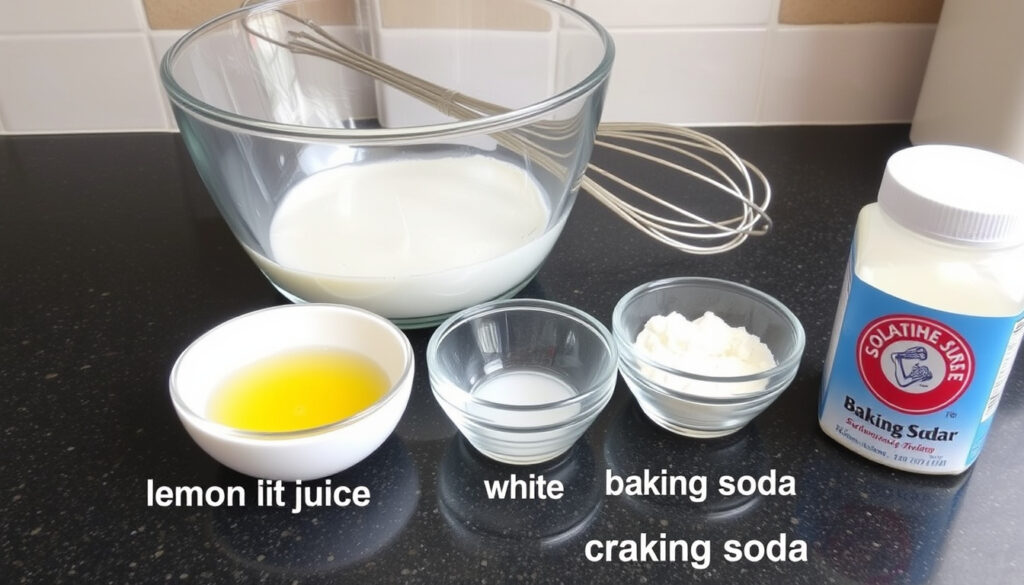
You’re halfway through whisking egg whites for a meringue when you spot the empty cream of tartar jar—it happens to every baker. This guide lays out the best substitutes—from lemon juice to baking powder—with exact ratios so your cookies, cakes, and meringues still come out right.
Active acidity level (pH): Cream of tartar ~2.9; lemon juice ~2.3; white vinegar ~2.5 ·
Typical substitution ratio (per ½ tsp cream of tartar): 1 tsp lemon juice or white vinegar ·
Common uses in baking: Stabilizing meringues, preventing sugar crystallization, activating baking soda ·
Alternative substitute: 1 tsp baking powder replaces ½ tsp cream of tartar + ¼ tsp baking soda
Quick snapshot
- Lemon juice and white vinegar substitute cream of tartar at a 2:1 ratio (McCormick (spice and baking authority))
- Baking powder works only when the recipe already includes baking soda (Sugar Spun Run (baking resource))
- Cream of tartar is not baking soda; they are chemically different (McCormick (spice and baking authority))
- Buttermilk substitution effects on final texture across all recipe types lack a single tier-1 study
- Ideal substitution ratios for macarons are not standardized in published research
- Royal icing performance with cream of tartar substitutes has limited documented testing
- No significant timeline events identified for this topic
- Check your recipe for baking soda – if present, baking powder is your easiest swap
- For meringue and candy, reach for lemon juice or white vinegar and adjust liquid
- Test buttermilk in batters by reducing other liquid by ¼ cup per substitution
Here are the key facts about cream of tartar at a glance.
| Chemical name | Potassium bitartrate |
| Primary function in baking | Acid stabilizer for egg whites and leavening activator |
| pH level | Approximately 2.9 |
| Common substitution ratio (lemon juice) | 1 tsp per 1/2 tsp cream of tartar |
What can I use if I don’t have cream of tartar?
Substitution ratios for common kitchen acids
Four kitchen staples can step in for cream of tartar, each with a specific ratio. The most straightforward swap: 1 teaspoon lemon juice or white vinegar for every ½ teaspoon cream of tartar, as confirmed by McCormick (spice and baking authority). The Spice House (specialty spice retailer) gives the same rule. Chatelaine (Canadian lifestyle publication) recommends a slightly higher amount: 2 teaspoons per 1 teaspoon cream of tartar. For most home baking, the 2:1 ratio works reliably.
How to substitute cream of tartar in meringue
Meringue requires a stable foam. King Arthur Baking (baking expertise) recommends ⅛ teaspoon cream of tartar per large egg white. Replace that with ¼ teaspoon lemon juice or white vinegar per white. Eats Delightful (baking resource) echoes the same ¼ teaspoon per egg white for either substitute.
Replacing cream of tartar in cookie recipes
For snickerdoodles, the cream of tartar contributes tang and spread. A direct swap: 1 teaspoon lemon juice per ½ teaspoon cream of tartar. Sugar Spun Run (baking blog) warns that baking powder substitution only works if the recipe already includes baking soda. If it doesn’t, use lemon juice or vinegar and adjust liquid accordingly.
What this means: For cookies, liquid substitutes can make dough slightly wetter. Reduce other liquid by 1–2 teaspoons to compensate, or use baking powder when the recipe has baking soda.
What happens if you skip cream of tartar?
Effects on meringue stability
Without cream of tartar, egg whites take longer to foam and may never reach firm, glossy peaks. King Arthur Baking (baking expertise) explains that the acid lowers the pH of egg whites, strengthening the protein network. Skipping it often leads to weeping or collapsed meringue.
Consequences for cookie texture
In snickerdoodles, cream of tartar reacts with baking soda to produce carbon dioxide and gives the cookie its characteristic chew. Leave it out and the cookies may turn flat and cakey. Sugar Spun Run (baking blog) notes that the texture change is noticeable.
Impact on sugar crystallization
Cream of tartar is a crystal inhibitor. In syrups and candy, it prevents sugar from recrystallizing. According to McCormick (spice and baking authority), skipping it can produce grainy caramel or brittle.
Home bakers face a structural risk: skip the acid in meringue and you lose volume; skip it in candy and you lose smoothness. The substitute choice determines the outcome.
The implication: Skipping cream of tartar compromises texture and stability, but the right substitute can salvage the recipe.
Is cream of tartar just baking soda?
Chemical differences between cream of tartar and baking soda
No. Cream of tartar (potassium bitartrate) is an acid; baking soda (sodium bicarbonate) is a base. McCormick (spice and baking authority) emphasizes they serve opposite roles. When combined with liquid, they react to produce carbon dioxide—that’s the leavening action.
When to use each ingredient
Use cream of tartar when you need acidity to stabilize egg whites or prevent crystallization. Use baking soda when you need a base to react with an acidic ingredient. The Spice House (specialty spice retailer) notes that substituting one for the other directly will not work.
How they work together in recipes
Many recipes pair cream of tartar with baking soda. The acid-base reaction provides lift. According to McCormick (spice and baking authority), you can replace the cream of tartar portion with 1.5 teaspoons baking powder per 1 teaspoon cream of tartar, but only if the recipe already calls for baking soda.
The pattern: Cream of tartar and baking soda are complementary, not interchangeable. One is the lock, the other the key.
What is the best cream of tartar substitute for meringue?
Lemon juice as a substitute for meringue
Lemon juice provides the same stabilizing acid. McCormick (spice and baking authority) confirms it helps form stiff peaks. Plated Cravings (home cooking site) recommends 1 teaspoon lemon juice for 5 egg whites if you don’t have cream of tartar.
White vinegar as an acid alternative
White vinegar is flavor-neutral and works identically to lemon juice in meringue. Simply Recipes (trusted recipe resource) notes vinegar is sometimes preferred in meringue cookies with strong flavorings. Use the same ratio: ¼ teaspoon per egg white.
Using cream of tartar substitute in macarons
Macarons demand precision. Sugar Spun Run (baking blog) advises that liquid substitutes can alter the batter’s moisture balance. If using lemon juice or vinegar, reduce egg whites by a small amount or add a teaspoon of powdered egg white to maintain structure.
Meringue-based desserts are the most sensitive to substitution. The acid’s job is to denature egg proteins at the right rate; switch to a liquid and you introduce water that can weigh down the foam.
What this means: For meringue-based desserts, choosing the right substitute is critical to maintaining structure and volume.
What is a substitute for cream of tartar in baking?
Baking powder as a direct substitute
Baking powder contains cream of tartar and baking soda. Use 1 teaspoon baking powder per ½ teaspoon cream of tartar. McCormick (spice and baking authority) gives 1.5 teaspoons per 1 teaspoon cream of tartar. Works only when the recipe includes baking soda, Sugar Spun Run (baking blog) warns.
Using buttermilk or yogurt in batter
Buttermilk or plain yogurt add acidity and moisture. For every ½ teaspoon cream of tartar, use ¼ cup buttermilk. Simply Recipes (trusted recipe resource) emphasizes that you must reduce other liquid in the recipe by the same amount to maintain batter consistency.
Adjusting other liquids when substituting
Any liquid substitute changes the water-to-flour ratio. Simply Recipes (trusted recipe resource) warns that substituting a wet for a dry ingredient can alter texture. For every ¼ cup buttermilk added, remove ¼ cup of another liquid. For lemon juice or vinegar, the volume is small enough (1–2 tsp) that adjustment is usually unnecessary unless the recipe is very dry.
The catch: Wet substitutes work for batters (pancakes, cakes) but not for dry doughs like shortbread. Always match the substitute to the recipe’s liquid budget.
| Substitute | Ratio (per ½ tsp cream of tartar) | Best for | Texture impact |
|---|---|---|---|
| Lemon juice | 1 tsp | Meringue, cookies, candy | Adds slight moisture; may reduce crispness |
| White vinegar | 1 tsp | Meringue, syrups, royal icing | Neutral flavor; minimal moisture change |
| Baking powder | 1 tsp | Cakes, cookies (with baking soda) | Adds extra leavening; may cause over-spread |
| Buttermilk | ¼ cup | Pancakes, cakes, muffins | Requires reducing other liquid; makes batter thicker |
What this means for your recipe: The acid strength varies. Lemon juice and vinegar are closest in pH to cream of tartar (2.3–2.5 vs 2.9). Baking powder and buttermilk are less acidic but provide leavening or moisture that may work in the recipe’s favor.
How to substitute cream of tartar: step-by-step
Follow these steps to replace cream of tartar in any recipe without guessing.
- Identify the role: Is the recipe a meringue, cookie, cake, or candy? The role determines the substitute.
- Check for baking soda: If the recipe includes baking soda, you can swap in baking powder at 1 tsp per ½ tsp cream of tartar. Source: McCormick (spice and baking authority).
- For meringue or candy: Use lemon juice or white vinegar at a 2:1 ratio. Add ¼ teaspoon per egg white. Source: King Arthur Baking (baking expertise).
- For batters (cakes, pancakes, muffins): Use buttermilk or yogurt – ¼ cup per ½ tsp cream of tartar – and reduce other liquid by ¼ cup. Source: Simply Recipes (trusted recipe resource).
- Adjust other ingredients: If using a liquid substitute, reduce another liquid in the recipe by the same volume to keep the dough or batter consistent.
- Test and adjust: Start with the recommended ratio and check consistency. Add a pinch of salt if using buttermilk to balance flavor.
Substituting cream of tartar in macarons or soufflés with lemon juice can cause thin batter. Use powdered egg white (½ tsp per egg white) to reinforce structure or choose vinegar for a neutral flavor.
Confirmed facts
- Lemon juice and white vinegar are effective substitutes at a 2:1 ratio (McCormick (spice and baking authority)).
- Baking powder substitutes for cream of tartar in recipes that include baking soda (Sugar Spun Run (baking resource)).
- Cream of tartar is not baking soda; they are chemically different (McCormick (spice and baking authority)).
What’s unclear
- The exact impact of buttermilk substitution on final baked texture across all recipe types is not documented in a single tier-1 source.
- Ideal substitution ratios for macarons specifically are less standardized in published research.
- The effect of cream of tartar substitutes on royal icing stability has limited documented testing.
Expert perspectives
“Lemon juice or white vinegar can replace cream of tartar in meringue. Use 1 teaspoon of either for every ½ teaspoon of cream of tartar called for.”
— McCormick (spice and baking authority)
“For each large egg white, ⅛ teaspoon cream of tartar is the standard. If you’re out, add ¼ teaspoon lemon juice or white vinegar per white.”
— King Arthur Baking (baking expertise)
These expert recommendations confirm that the 2:1 ratio is a reliable starting point for most home baking.
reddit.com, twosugarbugs.com, allrecipes.com, healthline.com
Frequently asked questions
Can I use baking soda as a substitute for cream of tartar?
No. Baking soda is a base and requires an acid to react. Using it alone will not provide stability or leavening. McCormick (spice and baking authority) explains they are chemically opposite.
What is the ratio for cream of tartar substitute in snickerdoodles?
Use 1 teaspoon lemon juice per ½ teaspoon cream of tartar. Sugar Spun Run (baking blog) also suggests baking powder if the recipe includes baking soda.
Can I substitute cream of tartar in a souffle with lemon juice?
Yes. Use ¼ teaspoon lemon juice per egg white. The souffle will still rise, but the added moisture may make it slightly less delicate. King Arthur Baking (baking expertise) recommends vinegar for a neutral flavor.
Is cream of tartar necessary for royal icing?
It helps stabilize the icing and prevent recrystallization. You can substitute with ¼ teaspoon lemon juice per cup of powdered sugar, but the icing may dry harder and gloss less. Simply Recipes (trusted recipe resource) notes acidity is key.
What happens if I use too much cream of tartar?
Excess cream of tartar can make baked goods taste sour or metallic. McCormick (spice and baking authority) advises sticking to the recipe amount.
Can I use cream of tartar substitute in macarons?
Yes, but with caution. Use ¼ teaspoon lemon juice or vinegar per egg white. Sugar Spun Run (baking blog) suggests adding a small amount of powdered egg white to compensate for moisture.
What is the shelf life of cream of tartar?
Indefinite if stored in a cool, dry place. McCormick (spice and baking authority) states it does not expire but may lose potency over years.
Does cream of tartar go bad?
No, but clumping can occur from humidity. It’s still safe to use; just sift before measuring. The Spice House (specialty spice retailer) recommends storing in an airtight container.
More related posts
 What Is RCS Message? Complete Guide to RCS Features
 How Old is Eminem – Age, Birthday, Height and Bio Facts
 The Good Home Onehunga: Is Onehunga a Good Home Location?
 ANZ Floating Interest Rate 2026: Current Rate, Increase, and Impact
 36 Questions to Fall in Love: List, Science & How-To
 When Will the World End? Science and Predictions
 How to Identify Scabies: Key Symptoms and Rash Signs
 Kāinga Ora Anti-Social Tenant Eviction: Rules & Process
