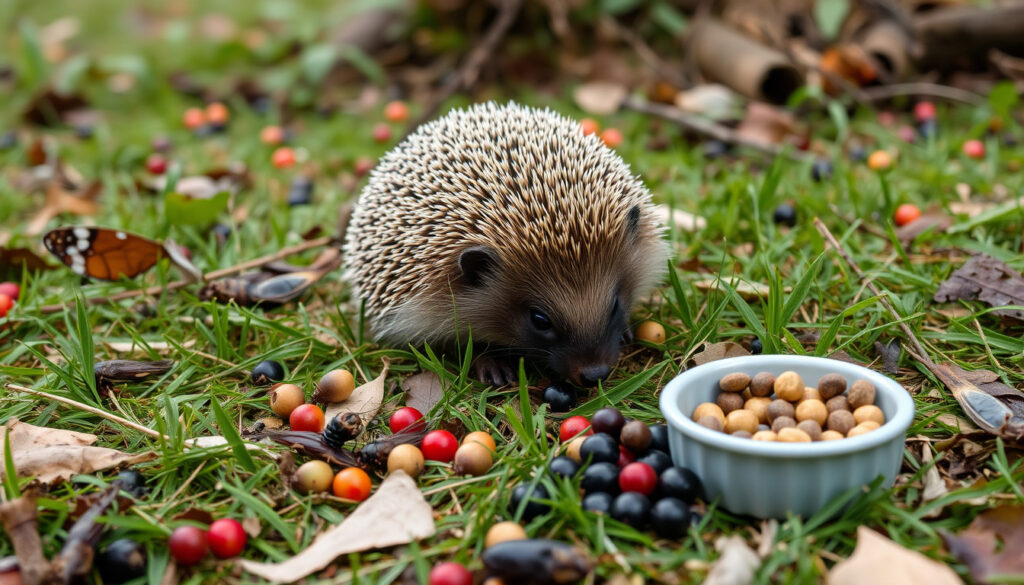
What Do Hedgehogs Eat? A Fact-Checked Guide to Wild and Pet Diets
Anyone who’s watched a hedgehog trundle across a garden at dusk has probably wondered what they’re actually after — that spiky snuffling is a targeted hunt for beetles, worms, and slugs. But for pet hedgehogs, the menu changes completely, and this article breaks down what they eat in the wild versus captivity, which foods are safe, and where owners slip up.
Wild diet: 70-80% invertebrates · Pets main food: High-quality kibble + insects · Safe produce: Tiny portions only · Key warning: No milk, nuts, or hard raw veg
Quick snapshot
- Wild hedgehogs eat mostly invertebrates: worms, beetles, slugs, caterpillars (Hedgehog Street (UK conservation charity))
- Pet hedgehogs need high-quality hedgehog or low-fat cat food as staple (VCA Hospitals (veterinary network))
- Insects like mealworms and crickets are recommended supplements (VCA Hospitals)
- Exact safe portion sizes for fruits and vegetables vary between sources — some advise against any produce at all (Pro Igel (conservation group))
- Whether wild hedgehogs benefit from supplementary feeding in gardens is debated (Hedgehog Street)
- Long-term health impacts of vegetable inclusion in pet hedgehog diets are not well studied (Hedgehog Program (care guide))
- Hedgehogs are seasonal eaters — they bulk up before hibernation and reduce intake in winter (Hedgehog Street)
- Pet hedgehogs should be fed daily; portion control is critical to prevent obesity (VCA Hospitals)
- More research needed on long-term health impacts of vegetable inclusion in pet hedgehog diets
- Growing awareness may shift commercial hedgehog food formulations
“Wild hedgehogs are generalist feeders whose diet is mostly made up of invertebrates.” — Hedgehog Street (UK conservation charity)
“Pet hedgehogs should mainly eat high-quality hedgehog food mixed with high-quality, low-fat cat food.” — VCA Hospitals (veterinary network)
What wild hedgehogs actually eat
In the wild, hedgehogs are generalist insectivores — their digestive system is built for chitin-rich invertebrates, not plant matter. The UK-based conservation group Hedgehog Street (wildlife charity) reports that their diet is mostly made up of invertebrates: worms, beetles, slugs, caterpillars, earwigs, and millipedes. These provide the high protein and low carbohydrate profile hedgehogs evolved on.
- Beetles and earthworms are the top two food items by frequency (Hedgehog Street)
- Slugs and caterpillars are also common, especially in damp conditions
- Less frequently: carrion, frogs, baby rodents, baby birds, birds’ eggs, and fallen fruit
The implication: wild hedgehogs are not designed for fruit or grains. Their occasional fruit consumption is opportunistic, not nutritional, and never makes up a meaningful part of their diet.
Key invertebrate prey by occurrence
Here’s a breakdown of the most common invertebrate prey and their role in a wild hedgehog’s diet.
| Prey type | Frequency in wild diet | Nutritional role |
|---|---|---|
| Earthworms | Very high | Protein, moisture |
| Beetles | Very high | Chitin for digestion, protein |
| Slugs and snails | High | Moisture, protein |
| Caterpillars | Moderate-high | Protein, fat |
| Earwigs | Moderate | Protein |
| Millipedes | Moderate | Protein, calcium |
A wild hedgehog’s gut is optimized for chitin and protein. Owners who replace insects with fruit risk starving their pet of essential nutrients — no matter how eagerly the hedgehog eats the sweet stuff.
What this means: if you’re feeding a wild hedgehog in your garden, the best offering is unseasoned cat food or specific hedgehog food — not bread or milk, which cause severe digestive distress.
Bottom line: Wild hedgehogs are built for chitin and protein, not sugar. Garden visitors need unseasoned meat-based food, never bread or milk.
What pet hedgehogs should eat
Pet hedgehogs have the same biological constraints as their wild cousins, but their activity levels are far lower — making diet composition and portion control absolutely critical. VCA Hospitals (veterinary network) advises that the staple should be high-quality hedgehog food mixed with high-quality, low-fat cat food. This provides balanced protein and fat without the excess carbohydrates that lead to obesity.
Six key foods, one pattern: insects are supplemental, kibble is foundational, and produce is strictly limited.
| Food type | Role in diet | Source recommendation |
|---|---|---|
| High-quality hedgehog kibble | Staple (largest portion) | VCA Hospitals |
| Low-fat cat food | Staple (mixed with kibble) | VCA Hospitals |
| Gut-loaded mealworms | Supplement (2-3x/week) | VCA Hospitals |
| Crickets (gut-loaded) | Supplement (2-3x/week) | VCA Hospitals |
| Fresh fruits (apple, pear, banana) | Tiny occasional treat | VCA Hospitals |
| Cooked vegetables (carrot, courgette) | Tiny occasional treat | Hedgehog Program (care guide) |
Safe fruits and vegetables — with major caveats
Multiple sources agree that fresh produce can be offered, but only in very small amounts. Hedgehog Program (specialist care guide) states that vegetables and fruit should never exceed a few percent of the diet. Their safe list includes carrot, courgette, and apple without seeds. Olympia Veterinary Hospital (veterinary practice) adds apples, bananas, berries, melons, tomatoes, green beans, and cooked squash.
But here’s where advice diverges sharply. Pro Igel (German hedgehog conservation group) explicitly warns against feeding any fruit, vegetables, cheese, nuts, quark, or yoghurt to hedgehogs. They recommend moist cat or dog food, eggs, poultry meat, minced meat, and bred feed insects as suitable items. This stricter position reflects a precautionary approach: hedgehogs simply don’t need produce, and any potential benefit is outweighed by the risk of digestive upset or obesity.
Even “safe” fruits like apples are high in sugar. A hedgehog eating a teaspoon of apple puree gets a sugar spike it never evolved to process. Pro Igel’s blanket ban on produce is extreme but rooted in solid biology — hedgehogs are not designed for sugar.
The pattern: produce is a garnish, not a meal component. If you offer fruits or vegetables, keep portions to a pea-sized amount once or twice a week at most, and remove uneaten pieces within hours to prevent spoilage.
Bottom line: Pet hedgehogs need a high-protein kibble base, with insects as supplements. Produce is optional and strictly limited; overfeeding sugar and starch invites obesity and disease.
Foods to avoid — the danger list
Olympia Veterinary Hospital lists a long set of banned items: raw meat and eggs, milk, nuts, seeds, hard foods such as raw carrots and dried vegetables, avocados, chocolate, garlic, onions, starchy foods like corn and potatoes, xylitol, lettuce, and celery. Many of these cause either choking risks (hard foods), toxicity (chocolate, garlic, xylitol), or severe digestive problems (dairy).
Confirmed dangerous foods at a glance
| Food | Risk | Source |
|---|---|---|
| Milk and dairy | Lactose intolerance → diarrhea, dehydration | Pro Igel |
| Raw meat and eggs | Salmonella, E. coli infection | Olympia Veterinary Hospital |
| Chocolate | Theobromine poisoning | Olympia Veterinary Hospital |
| Garlic and onions | Hemolytic anemia risk | Olympia Veterinary Hospital |
| Nuts and seeds | Choking, high fat, digestive obstruction | Olympia Veterinary Hospital |
| Avocado | Persin toxicity | Olympia Veterinary Hospital |
| Xylitol (artificial sweetener) | Rapid insulin release, hypoglycemia | Olympia Veterinary Hospital |
| Lettuce and celery | Low nutritional value, choking (celery strings) | Olympia Veterinary Hospital |
Why this matters: many of these “human foods” appear in kitchens daily, and owners may assume a tiny bit won’t hurt. But a hedgehog’s digestive system is radically different from ours — even a small piece of avocado can be toxic.
Bottom line: Hedgehog owners must avoid milk, raw meat, chocolate, garlic, nuts, seeds, and avocado. Even common kitchen scraps can be fatal.
Feeding schedule and portion tips
Consistency and control are the twin pillars of feeding a pet hedgehog. VCA Hospitals recommends feeding once daily, in the evening, matching their nocturnal activity pattern. Kibble should be left in a bowl for the hedgehog to graze on overnight, but uneaten wet food must be removed after a few hours to prevent spoilage.
- Portion size: 1-2 tablespoons of kibble per day, depending on size and activity
- Insects: 2-3 times per week, 5-10 mealworms or 2-3 crickets per serving
- Treats (fruit/veg): once or twice a week, pea-sized portion
- Always provide fresh water in a heavy ceramic bowl (not a bottle — hedgehogs struggle with sipper tubes)
Obesity is the number one health problem in pet hedgehogs, directly linked to overfeeding and high-carb treats. A hedgehog that cannot roll into a complete ball is likely overweight. Adjust portions immediately if you notice weight gain.
The trade-off: owners want to spoil their pets with treats, but every extra gram of sugar or starch moves the hedgehog closer to fatty liver disease, dental problems, and shortened lifespan.
Bottom line: Feed once daily in the evening, control portions strictly, and monitor body condition. A hedgehog that can’t fully curl up is overfed.
chewy.com, thesprucepets.com, aphownerssa.wordpress.com, green-feathers.co.uk, petmd.com, olympiaveterinaryhospital.com, smallpetexpert.com, medium.com
Frequently asked questions
Can hedgehogs eat cat food?
Yes — high-quality, low-fat cat food is a recommended staple for pet hedgehogs. Choose a formula with at least 30% protein and under 15% fat. Avoid fish-based varieties, as some hedgehogs develop allergic reactions.
Do hedgehogs eat fruits and vegetables?
Wild hedgehogs eat fallen fruit very rarely, and only when invertebrates are scarce. Pet hedgehogs can be offered tiny amounts of safe produce (apple, pear, cooked carrot) as occasional treats, but many experts advise against it entirely.
Can hedgehogs eat mealworms?
Yes, but in moderation. Mealworms are high in fat and phosphorus. VCA Hospitals recommends gut-loaded mealworms as a supplement, not a staple — limit to 5-10 per serving, 2-3 times per week.
What should I feed a wild hedgehog in my garden?
Leave out unseasoned wet cat or dog food (meat-based, not fish), or specialist hedgehog food. Hedgehog Street advises against bread and milk — both cause diarrhea. Provide fresh water in a shallow dish.
How often should I feed a pet hedgehog?
Once daily in the evening. Leave kibble available overnight and remove wet food after 4 hours. Adjust portions based on activity level and body condition — a hedgehog that can’t curl into a ball is overfed.
Is it safe to give hedgehogs eggs?
Hard-boiled egg is safe as a supplemental treat in small amounts. VCA Hospitals lists it as acceptable. Never feed raw egg due to salmonella risk.
Can hedgehogs eat bread?
No. Bread has no nutritional value for hedgehogs and can cause digestive blockages. Hedgehog Street explicitly warns against it, along with milk.
Understanding these common questions helps hedgehog owners make informed choices.
Related reading
- Is a Pumpkin a Fruit or Vegetable? — helps understand classification of common hedgehog-safe produce
- Epsom Salts for Plants: Benefits, Risks, and How to Use Them — covers garden supplements that may affect hedgehog foraging environments
For hedgehog owners in New Zealand, the choice is clear: stick to a high-protein kibble base, add gut-loaded insects as supplements, and treat produce as an occasional curiosity at most — or risk turning a healthy insectivore into an overweight patient with a shortened lifespan.
More related posts
 Best Free Password Generator: Top Tools for Strong Passwords
 Best Sci-Fi Movies of the 2020s: Top Picks & Rankings
 The Last Frontier Cancelled: Why It Ended After Season 1
 I Thought I Saw Your Face Today Lyrics – Full Text & Meaning
 A Knight of the Seven Kingdoms Episodes – Season 1 Full Guide
 Dogs for Sale Auckland: Cheap, Small Breeds & Puppies
 Jeremiah 29:11 Meaning: For I Know the Plans I Have for You
 Papakura Student Patroller Hit: 5th Child Run Over This Term
