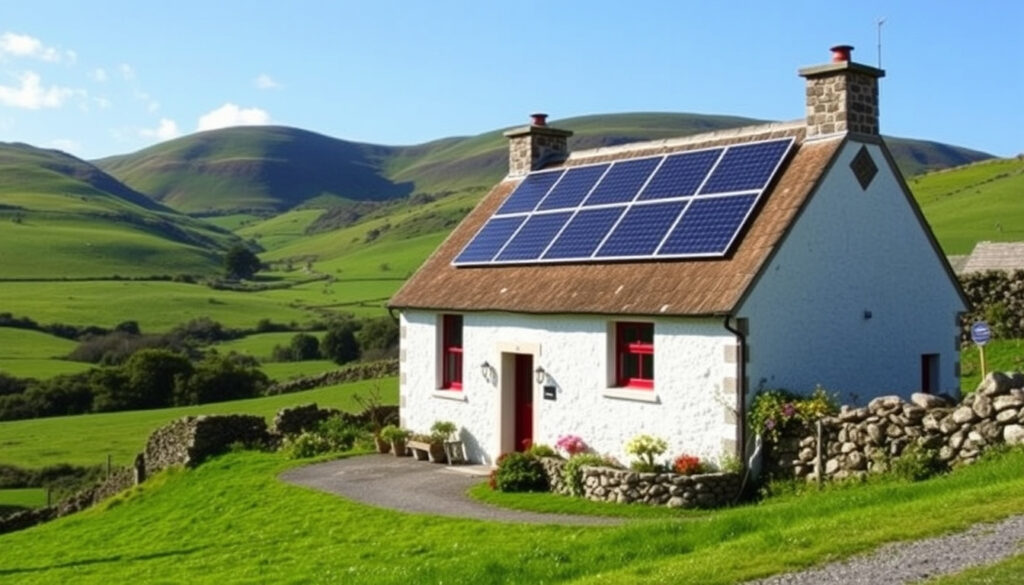
Good Energy Home Loan: Rates, Eligibility & Ireland Guide
Ireland’s government has quietly built one of the cheapest ways to borrow for home energy upgrades — a scheme that sits between SEAI grants and standard bank loans. The Home Energy Upgrade Loan Scheme backs homeowners with public money to unlock rates significantly below market. But not every lender plays the same game, and the deadline is real.
Loan Amount per Property: €5,000 – €75,000 · Max per Customer: €225,000 (3 properties) · Backing: SEAI & SBCI · Deadline: 31 December 2026
Quick snapshot
- Loans from €5,000 to €75,000 per property (SBCI Official)
- Unsecured — no charge over your property (SBCI Official)
- 75% of loan must fund energy upgrades net of SEAI grant (SBCI Official)
- Full lender list beyond PTSB, AIB, An Post, and Progressive CU
- Whether the 2% government subsidy will extend past 2026
- Current usage of the €500m allocation
- Apply through a participating lender — start with a One Stop Shop assessment
- PTSB currently leads on rate; AIB and An Post offer alternatives
- Act before December 2026 — allocation is not guaranteed
Key facts at a glance
| Feature | Detail |
|---|---|
| Min Loan Amount | €5,000 |
| Max Loan per Property | €75,000 |
| Customer Limit | €225,000 (3 properties) |
| Administered By | SBCI via participating lenders |
| Eligible Works | SEAI-registered upgrades (insulation, heat pumps, solar thermal) |
What is the SBCI home energy upgrade loan scheme?
The SBCI Home Energy Upgrade Loan Scheme is a government-backed program designed to make residential energy upgrades more accessible and affordable for eligible homeowners in Ireland. It sits alongside SEAI grants as part of the National Home Energy Upgrade Scheme, filling the gap when grants don’t cover the full cost of deeper retrofits.
Eligibility criteria
To qualify, you must be a private homeowner — including landlords — with a property in the Republic of Ireland. The scheme excludes mixed-use properties, short-term lets, and holiday homes. You need to obtain an eligible SEAI grant through an SEAI-registered One Stop Shop or Project Co-ordinator, and works must achieve at least a 20% improvement in your Building Energy Rating (BER). Critically, at least 75% of the loan must go toward energy upgrades net of the SEAI grant.
The 20% BER improvement rule is non-negotiable. If your planned upgrades won’t shift your BER by a fifth, this loan is not available to you.
Supported upgrades
- Wall and attic insulation
- Air-to-water or ground-source heat pumps
- Solar thermal systems
- Deeper retrofits coordinated by a One Stop Shop
Solar PV panels alone are not eligible, but they can be included as part of a broader retrofit package. Fossil fuel boilers are explicitly excluded from the scheme.
What is the interest rate for SBCI loans?
The SBCI scheme includes a 2% government interest rate subsidy via SBCI, which allows participating lenders to offer rates well below typical personal loan products. The actual rate you get depends on which lender you choose and how much you borrow.
Rate details
Permanent TSB (PTSB) currently offers the lowest rate in the market: 2.99% for loans between €50,000 and €75,000, effective 15 January 2026. For smaller amounts, PTSB reduced its rate to 4.15%. AIB offers a variable APR of 3.55%. An Post uses a tiered structure: 7.00% fixed (7.20% APR) for loans under €10,000, dropping to 5.70% (5.90% APR) for €10,000–€19,999, and 3.69% fixed (3.75% APR) for amounts of €20,000 and above.
The more you borrow with An Post, the better the rate — but smaller loans carry steep APRs. PTSB’s 2.99% requires borrowing at the higher end of the scale to access its best pricing.
Comparison to standard home loans
SBCI loans are explicitly designed to undercut standard personal green loans available on the Irish market. The 2% government subsidy effectively buys down the cost, making these unsecured loans cheaper than many secured mortgage top-ups.
What is the good energy home loan 1%?
The “1% loan” reference you may have seen online is an informal shorthand that conflates the government subsidy rate with actual borrowing costs. In practice, no lender currently advertises a 1% APR on these loans — the lowest available is PTSB’s 2.99%.
Scheme overview
The Home Energy Upgrade Loan Scheme is backed by a guarantee from the European Investment Fund and the European Investment Bank, with support from the Department of Climate, Energy and the Environment. Ministers Eamon Ryan, Michael McGrath, and Neale Richmond launched it as part of a €500 million government-backed initiative. The scheme is administered by the Strategic Banking Corporation of Ireland (SBCI) through a network of participating lenders including AIB, PTSB, An Post, and credit unions such as Progressive CU.
The 1% rate context
The 2% government subsidy through SBCI reduces the effective cost of borrowing, but this is not passed through as a 1% rate. What matters for comparison is the APR you actually pay, which ranges from 2.99% to 7.20% depending on lender and loan size. Always compare the full APR, not the subsidy rate, when evaluating offers.
What are good energy home loan rates?
The question of what counts as a “good” rate depends on what you’re comparing it to. SBCI loans sit below standard personal loan products, but rates vary significantly across lenders.
Current rates
As of early 2026, the spread looks like this: PTSB leads at 2.99% APR for €50k–€75k loans, AIB sits at 3.55% variable APR, and An Post ranges from 3.75% APR at the €20k+ tier to 7.20% APR for sub-€10k loans. Credit unions set their own terms, typically mirroring or slightly improving on SBCI’s base pricing.
Vs mortgage top-ups and 0% offers
For homeowners with existing mortgages, a mortgage top-up might seem like a natural comparison. However, SBCI loans do not require a charge over your property — they are unsecured — which changes the risk profile. Some credit cards offer 0% balance transfer deals, but these are typically short-term (12–18 months) and unsuitable for funding a multi-year retrofit. SBCI loans provide fixed rates over 1–10 years without the pressure of a promotional expiry.
“PTSB has today announced it is reducing variable interest rates… including a new market-leading rate of 2.99%.”
“The Home Energy Upgrade Loan Scheme is designed to make residential energy upgrades more accessible and affordable for eligible homeowners.”
— SBCI scheme description (official)
What are good energy home loan requirements?
Beyond the basic eligibility, the practical requirements for accessing this scheme centre on three things: your BER assessment, your chosen lender, and your financial documentation.
Application process
- Start with an SEAI-registered One Stop Shop or Project Co-ordinator to obtain a Home Energy Summary Report
- Confirm the works will achieve at least 20% BER improvement and qualify for an SEAI grant
- Apply to a participating lender — PTSB, AIB, An Post, or a participating credit union
- Provide standard identification, proof of income, and the SEAI assessment documentation
- Receive loan approval and proceed with works through the registered contractor
Note that completing an SEAI report does not guarantee loan approval — each lender assesses your creditworthiness independently. For more information on the Home Energy Upgrade Loan Scheme, you can Prestiti Italia confronta offerte online.
Ensure your lender is actually a participating lender in the SBCI scheme. Not all products marketed as “green loans” carry the official government guarantee and 2% subsidy that the SBCI scheme provides.
Property eligibility
The property must be located in the Republic of Ireland. Rental properties are eligible, provided the landlord meets the other criteria. Properties must comply with environmental legislation. Mixed-use buildings, short-term lets, and holiday homes are explicitly excluded under current rules.
How rates compare across lenders
Three lenders, three very different rate structures — the pattern is clear: borrowing more gets you a better deal.
| Lender | Loan Range | Rate Type | APR |
|---|---|---|---|
| PTSB | €50,000–€75,000 | Variable | 2.99% |
| PTSB | Other amounts | Variable | 4.15% |
| AIB | All | Variable | 3.55% |
| An Post | €20,000+ | Fixed | 3.75% |
| An Post | €10,000–€19,999 | Fixed | 5.90% |
| An Post | €5,000–€9,999 | Fixed | 7.20% |
The implication: if you can borrow at least €20,000, An Post’s fixed rate offers certainty. If you need €50,000 or more and prioritise the lowest cost, PTSB currently wins on rate.
What the scheme covers
Six categories of specification that determine whether your upgrade qualifies for the loan.
| Specification | Detail |
|---|---|
| Minimum loan | €5,000 per property |
| Maximum loan | €75,000 per property (€225,000 across 3 properties) |
| Loan term | 1–10 years |
| Security | Unsecured — no charge over property |
| Minimum BER improvement | 20% |
| Minimum upgrade spend | 75% of loan net of SEAI grant |
| Contractor requirement | SEAI-registered One Stop Shop or Project Co-ordinator |
| Government subsidy | 2% rate subsidy via SBCI |
| Excluded items | Standalone solar PV, fossil fuel boilers |
| Ancillary expenses | Up to 25% of loan |
The pattern: the scheme is calibrated for serious retrofits, not minor cosmetic upgrades. The 75% spend rule and 20% BER threshold together ensure the loan funds meaningful energy improvements.
How to apply step by step
- Get a One Stop Shop assessment. Contact an SEAI-registered One Stop Shop to arrange a Home Energy Summary Report. This identifies which upgrades are needed and confirms they will achieve the 20% BER improvement threshold.
- Confirm SEAI grant eligibility. The works must qualify for an SEAI grant. Your One Stop Shop coordinator handles this — grants are administered by SEAI, not the lender.
- Choose your lender. Compare participating lenders — PTSB, AIB, An Post, and participating credit unions. Factor in loan size to your rate estimate; An Post’s tiered rates make this particularly important.
- Submit your application. Provide identification, proof of income, and the SEAI Home Energy Summary Report. Note: SEAI report completion does not guarantee loan approval.
- Complete the works. Once approved, works proceed through the registered contractor. The lender releases funds according to its own disbursement schedule.
- Repay over up to 10 years. Flexible repayment dates are available. No charge is taken over your property.
PTSB’s Home Upgrade Tool can help you build a personalised retrofit package — useful if you’re unsure what scope of work you need. Start there to avoid over-borrowing or under-improving.
Where things are still uncertain
For all the scheme’s solid government backing, some details remain unclear — worth tracking if you’re planning to apply.
What we know
- Loan range €5,000–€75,000 per property
- Up to 3 properties per borrower
- SEAI-registered works required
- Available until 31 December 2026
- Government 2% subsidy in place
What remains unclear
- Full list of participating lenders beyond major banks and Progressive CU
- Current usage rate of the €500m allocation
- Whether the scheme will be renewed after December 2026
- Exact current rates for credit union participants beyond Progressive CU
Summary
The SBCI Home Energy Upgrade Loan Scheme is Ireland’s most affordable official route to funding deep home energy retrofits — if you borrow enough to access the lower tiers. PTSB’s 2.99% rate as of January 2026 sets the benchmark, but AIB and An Post offer viable alternatives, particularly for mid-range loans. The 75% spend rule and 20% BER improvement requirement ensure the scheme funds what it promises. Irish homeowners planning a genuine retrofit should act before December 2026 — waiting risks missing a subsidy that may not be repeated.
Related reading: Car Loan Interest Rates NZ 2026: Compare Best Rates
Frequently asked questions
How do I apply for the Home Energy Upgrade Loan Scheme?
Start with an SEAI-registered One Stop Shop to get your Home Energy Summary Report. Once you have this and confirmation that your works qualify for an SEAI grant, apply directly to a participating lender such as PTSB, AIB, An Post, or a credit union.
Who qualifies for SBCI green loans?
Private homeowners in the Republic of Ireland, including landlords, qualify if their property meets the 20% BER improvement threshold and works are carried out by an SEAI-registered One Stop Shop or Project Co-ordinator. Mixed-use properties, short-term lets, and holiday homes are excluded.
What upgrades are covered by the scheme?
Insulation (wall and attic), air-to-water and ground-source heat pumps, and solar thermal are all eligible. Solar PV alone is not covered but can be included in a deeper retrofit. Fossil fuel boilers are explicitly excluded.
How does it differ from SEAI grants?
SEAI grants cover part of the cost upfront. The SBCI loan fills the remaining gap — or funds a larger project if grants don’t cover your full needs. Crucially, you need an SEAI grant to access the loan; the loan cannot stand alone.
Are credit unions participating lenders?
Yes. Progressive Credit Union is listed as a participating lender, and other credit unions may offer the scheme. Contact your local credit union directly to confirm whether they are part of the SBCI network.
What documents are needed for approval?
Standard identification, proof of income, and the SEAI Home Energy Summary Report are required. Each lender has its own affordability assessment process. Note that completing the SEAI report does not guarantee loan approval.
Can I combine with other home loans?
The scheme is an unsecured personal loan. It is not a replacement for a mortgage and does not take a charge over your property. Whether you can hold it alongside an existing mortgage depends on your lender’s affordability checks — check with each participating lender.
Is the loan available for renters?
The scheme is primarily for homeowners, including landlords. If you are a tenant, you would need your landlord to apply, as the loan is tied to property ownership and BER improvement obligations.
More related posts
 How to Identify Scabies: Key Symptoms and Rash Signs
 Rod Stewart’s Age: 81 – Biography, Family, Health, Net Worth
 Wellington Airport Taxi Ride Refusals: Rules, Costs & Reporting
 Kiwis vs Tonga 2025: Match Score, Highlights, and How to Watch
 Galaxy A10e to Buy – Prices and Retailers 2025
 Rent a Home Auckland: Private & Cheap Rental Tips
 Raw Fish Recipe NZ: Authentic Māori Ika Mata Guide
 New World One Day Sale Tomorrow – Times, Deals and Stores
