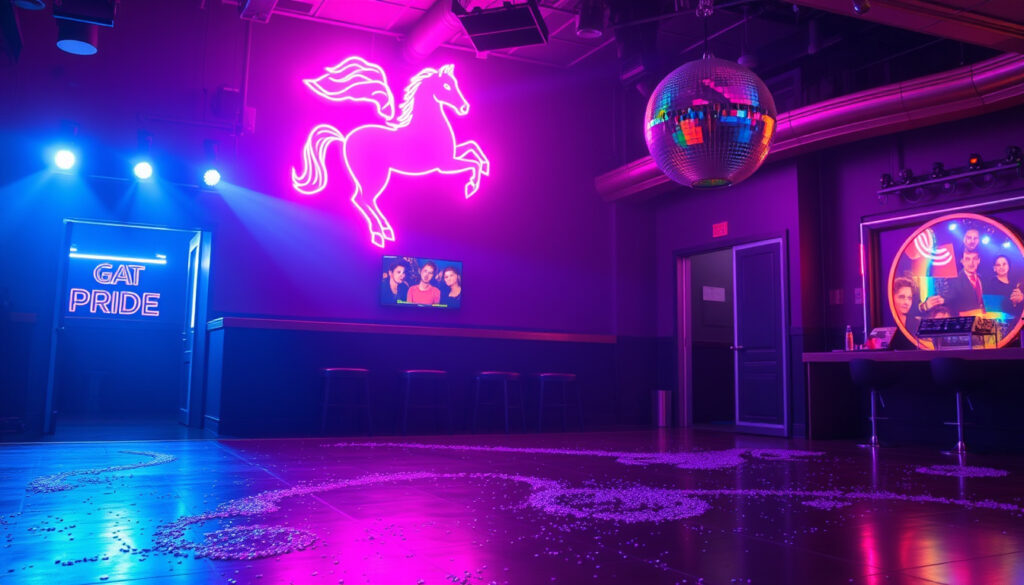
Pink Pony Club Meaning: Lyrics, Background & LGBTQ Anthem
Chappell Roan’s “Pink Pony Club” is more than a catchy synth-pop track—it’s a queer anthem that transformed from a 2020 album cut into a 2024 cultural phenomenon. This article unpacks the song’s meaning, its metaphor of a strip club as a safe space, and the importance of supportive language for those finding their own “pink pony club.”
Song: “Pink Pony Club” · Artist: Chappell Roan · Release Year: 2020 · Album: The Rise and Fall of a Midwest Princess · Length: 3:57
| Attribute | Detail |
|---|---|
| Artist | Chappell Roan |
| Real Name | Kayleigh Rose Amstutz |
| Release Year | 2020 |
| Album | The Rise and Fall of a Midwest Princess |
| Length | 3:57 |
| Label | Amusement Records |
What does “Pink Pony Club” mean?
“Pink Pony Club” is a story about leaving home to chase a dream that feels more real than the one you were given. It’s a literal and metaphorical road trip from a stifling, small-town existence to a glitter-soaked sanctuary where the protagonist finally feels she belongs. The song’s protagonist isn’t just going to a club; she’s going to a place where her identity is not only safe but celebrated. This isn’t a story about a physical building as much as it is about the internal liberation that happens when you find your people and your purpose.
- The song is widely embraced as an LGBTQ+ anthem.
- It contains explicit references to strip clubs and sexuality, making it inappropriate for children without context.
- The term “pink pony” is not an inherent reference to any real club; it serves as a symbol of queer joy and escapism.
What is Pink Pony Club based off of?
The Pink Pony Club in the song is partly inspired by the real “Pink Pony” strip club chain, but the specific venue is fictional. Chappell Roan has said she was influenced by her own experiences moving to Los Angeles and visiting strip clubs, where she observed a sense of liberation and self-expression. Some fans also point to a club in her hometown, but the artist has not confirmed that detail.
What does the song “Pink Pony Club” say?
Lyrically, “Pink Pony Club” is a first-person narrative that doesn’t mince words. She sings about leaving her Tennessee home, much to her mother’s dismay, and finding a new family in a West Coast club. The verses are rich with sensory details—the lights, the DJ, the primal need to dance—but the heart of the song is the internal shift. It’s a song about unlearning shame and choosing a future where authenticity takes center stage, even when it means dancing in a place that might look scandalous from the outside. The lyrics explicitly own the sexuality and the scene, yet the emotional core is surprisingly tender and hopeful.
Why does the phrase “Pink Pony Club” matter in today’s culture?
The phrase has evolved into a cultural shorthand, largely thanks to the song’s explosive popularity on TikTok and other social media platforms from 2024 onward. It represents a specific kind of safe space that is created through self-acceptance. Its themes of self-acceptance and queer identity resonated with a wide audience because they offer a narrative of radical self-love in a world that often asks for conformity. The club represents a sort of paradise where you get to define the rules. That idea is potent, especially in moments where public discourse can feel polarizing, making the “Pink Pony Club” a shared vocabulary for personal transformation.
Is “Pink Pony Club” LGBTQ+?
Yes, unequivocally. It is a song that is both by a queer artist and for the LGBTQ+ community. It celebrates queer liberation, and its mainstream success has been largely driven by queer audiences who see their own search for community reflected in the lyrics. It is a piece of art that provides visibility and affirmation, solidifying its place as a significant piece of queer pop history. It’s a dance anthem that is undeniably queer in its DNA.
The song’s appeal is broad, but its origin is specifically about a queer experience. It’s about leaving a place where you feel like an outsider and finding a chosen family. The fact that it has topped non-Binary and LGBTQ+ charts isn’t a marketing gimmick; it’s a reflection of the audience it speaks directly to. For many, it’s an anthem of hope, a musical hug for anyone who felt they had to run away to be themselves.
Is Pink Pony Club inappropriate?
Yes, due to explicit references to strip clubs and sexuality, the song is inappropriate for children without context. Parents should be aware that the lyrics directly describe a strip club environment, though the overall message is one of liberation and self-acceptance.
Is “Pink Pony Club” about drugs?
While the title might evoke a psychedelic image, the song is not about drugs. There is no lyrical reference to substance use, and Chappell Roan has not suggested any drug inspiration.
The “club” in the song is a place of communal and personal euphoria, but it’s an emotional and spiritual high, not a chemical one. It’s about the intoxication of feeling free and accepted. In that sense, the song is more about a “natural high” that comes from embracing your true self, a much more sustainable and life-affirming rush than any substance. It might be about the parts of club culture that offer a place to let go, but the focus is on the emotional release.
What does “Pink Pony” mean as an idiom or slang?
It’s a compelling question because the phrase isn’t a common idiom. It’s not from a historical dictionary or a classic slang list. Its meaning is almost entirely derived from the context of Chappell Roan’s song. The “pink pony” is a vehicle—a symbol that carries the singer out of her old life and into a new one. It represents a thrilling, somewhat risky, but ultimately life-saving change. It also carries a playful, slightly absurdist, and innocent image that contrasts with the very adult setting of a strip club, creating a charming tension.
This juxtaposition is key: a pink pony is a child’s toy, a carousel animal, a carnival ride. It’s innocent. Putting that in a place as adult and often seedy as a strip club creates a magical, almost psychedelic mental image. It turns a potentially exploitative or degrading space into a place of wonder and play. It shows the power of perspective—taking something potentially dark or dangerous and reframing it as a source of joy and freedom. It speaks to redefining spaces for yourself, regardless of how society may view them.
What makes “Pink Pony Club” popular on social media?
The song’s popularity is a masterclass in digital organic marketing. It gained popularity on TikTok and other social media platforms from 2024 onward, initially through Chappell Roan’s own unique, larger-than-life persona in live performances and subsequently through fan-created content. Users found the song’s dynamic shifts—from heartfelt verses to a booming, anthemic chorus—perfect for transition videos and emotional reveals. The narrative of leaving a small town for a bigger, gayer life is incredibly relatable, and the song offers a sonic backdrop for anyone’s “glow-up.”
Beyond the audio, the visual component is huge. Roan’s drag-inspired, high-fashion looks are inherently shareable, and her live performances, which often feature choreography and a sense of theatricality, provide a feast for the eyes. The fan base (and Roan herself) leaned into the “Midwest Princess” lore, creating a sense of inside jokes and community, which the algorithm loves. It’s a perfect storm of a relatable theme, a genre-bending beat, and visually engaging internet content that just makes people want to hit the “share” button.
What is the importance of supportive language around mental health?
While “Pink Pony Club” is about a fictional place, the feelings it evokes are real—and that’s where the importance of supportive language around honesty and low-motivation distress comes in. Telling your own story, especially a coming-out story or a “I’m not okay” story, requires courage. Supportive language—both the words we use for ourselves and the ones we offer others—helps validate those experiences. It can be as simple as saying, “I’m here to listen,” or acknowledging that someone’s feelings matter, even when you don’t fully understand them. A therapist-oriented article says honest conversations require sharing hopes, fears, insecurities, and dreams to build genuine connections. Your Thoughts Ninja (a psychology & self-help blog) notes that true intimacy is built on this bedrock of honesty.
Using affirming words can be a lifeline for someone struggling. A mental-health quotes article recommends using language that acknowledges feelings, names a need, and chooses one manageable action. Buzzi Health (a mental wellness resource) This is crucial because it shows the difference between dismissing someone’s struggle and moving them toward a little bit of hope. It’s about shifting the narrative from “What’s wrong with you?” to “Tell me more about what’s been hard.” It’s a small shift in language that can make a big difference in how a person feels heard and understood. The words we use can either alienate or connect, so it’s vital to choose them with intention. Groundbreaker Therapy (a therapy practice) also emphasizes that seeking professional help is a sign of strength when those feelings become overwhelming. Just as the song speaks to a communal experience of finding a place that “gets” you, supportive language creates that sense of being known in real life.
Confirmed Facts: Finding the Right Words
- “Your feelings are valid” is a supportive phrase from WritingCraze for someone struggling with mental health. WritingCraze (a writing resource)
- Encouragement lists also include “I’m here to support you,” a phrase recommended by WritingCraze. (WritingCraze (a writing resource))
- FreeValleys lists “It’s okay to be a work in progress” as a mental-health slogan. FreeValleys (a mental health awareness site)
- CPR First Aid Australia lists “It’s okay not to be okay” as a mental-health saying. CPR First Aid Australia (an Australian first-aid training organization)
- The same article also lists “Mental health is health” and “You are not alone” as key phrases. (CPR First Aid Australia (an Australian first-aid training organization))
- Success.com’s quote roundup attributes “Self-compassion is simply giving the same kindness to ourselves that we would give to others” to Christopher Germer. Success (a personal development magazine)
- The same Success.com roundup also includes quotes about resilience and growth. (Success (a personal development magazine))
- Many mental-health resources stress that a person’s crisis is valid, regardless of the specific cause. This perspective is often highlighted in resources aimed at validating individual experiences. World Health Organization (public health leader)
What are the best encouraging words for friends or loved ones?
Finding the perfect thing to say can feel impossible, but it’s often simpler than you think. The best words are genuine, specific, and avoid clichés. Instead of a generic “You’ll get over it, just be positive,” try focusing on empathy. Acknowledge their reality with phrases like, “I can see you’re having a tough time” or “That sounds really hard to carry.”
- Name the need: A mental-health article recommends using language that acknowledges feelings and names a need. For example, you can say, “What do you need right now?” or “I’m here to listen if you want to talk.” This is recommended by Buzzi Health (a mental wellness resource).
- Offer specific help: Instead of “Let me know if you need anything,” which can feel like a burden, offer concrete actions: “Can I bring you a coffee this week?” or “Do you want to go for a walk on Saturday?”
- Normalize the struggle: Remind them it’s okay not to be perfect, as “It’s okay to be a work in progress,” which is one of the mental-health slogans suggested by FreeValleys (a mental health awareness site). This removes the pressure to perform immediate happiness.
- Validate the feeling: Use the supportive phrase “Your feelings are valid,” as suggested by WritingCraze (a writing resource). It’s a simple, powerful way to confirm their inner world matters.
- Just be present: Sometimes, no words are needed. Your presence, engagement, and patience are a gift in themselves, showing you’re not scared off by their darkness.
If a friend is in crisis, don’t try to be a hero alone. The Groundbreaker Therapy (a therapy practice) article points to the 988 Suicide & Crisis Lifeline as a vital resource for those in distress or facing suicidal thoughts. It’s a sign of deep care to help connect them with professionals.
We hear these words a lot, but do they actually help?
It’s a fair question: If saying “It’s okay” is so easy, does it even do anything? The answer is yes, but with a caveat—it depends on the authenticity behind it. Platitudes can be empty if they are just words without empathy. But when coupled with genuine presence and non-judgment, supportive phrases can be a lifeline. They can interrupt an isolating spiral and remind someone they are not a burden.
PositivePsychology.com, a widely respected resource for psychology professionals, notes that supportive language can help individuals feel more understood and less isolated. When you say “Your feelings are valid,” you’re implicitly saying, “Despite what that voice in your head says, it makes sense you’re upset.” This is not about fixing the problem; it’s about validating the person. It strengthens the connection, and in that connection, a person can find the strength to take the next step, whether that’s getting out of bed, reaching out to a therapist, or simply getting through the next hour.
How do we ask for help when we’re struggling?
Sometimes, being the supportive friend is easier than being the one who needs support. For many, asking for help feels like a confession of failure. The National Alliance on Mental Illness (NAMI) suggests that starting with a simple statement like, “I’ve been going through a tough time and I’m feeling overwhelmed,” can make the request less daunting. It’s honest and likely to be met with empathy rather than rejection.
It can also be helpful to be specific about the kind of support you need. If you need someone to listen, say so. If you need help solving a practical problem, ask for that. This isn’t just about the act of asking; it’s also a moment of self-compassion—you’re giving yourself the same kindness you would offer a friend. A mental-health awareness article from Groundbreaker Therapy (a therapy practice) reiterates that having the courage to seek professional help when you feel overwhelmed is not a sign of weakness, but a proactive step toward well-being. That act of reaching out is often the bravest thing you can do.
What are some common mistakes to avoid when comforting someone?
Often, we want to help so much that we inadvertently say the wrong thing. The biggest mistake is jumping to a solution or trying to “fix” the problem with logic. When someone is sharing feelings, they typically are not looking for a ten-step plan. They want to be heard. For instance, saying “At least you have other people” can feel dismissive, minimizing their pain. It can be more helpful to say, “I’m sorry you’re feeling this way.”
Another common misstep is making it about you. Phrases like “I know how you feel” can sometimes feel like a hijacking of their narrative. Even if you have a similar experience, you can’t fully know how they feel, so it’s often better to focus on them. Instead, Your Thoughts Ninja (a psychology & self-help blog) highlights that letting them lead the conversation with curiosity is more supportive. Also, avoid toxic positivity—clichés like “It could be worse” are almost never helpful. They shut down the conversation and invalidate the person’s legitimate pain. It tells them, “Your feelings are too big for me to handle, so please put them away.”
Want to know the best part about supportive words?
You don’t need to be a therapist to offer support. You don’t even need to have the right words. The best part is that simply showing up and being present is sometimes enough. It’s about being a safe harbor, not a rescue boat. Chappell Roan’s “Pink Pony Club” works because it captures a feeling of being seen and understood without needing to explain yourself. We all have a spark of that longing to be discovered—but our real life “Pink Pony Club” needs to be built on solid ground.
That means being more than just a listener; it means being someone who doesn’t shy away from the messy stuff. The goal isn’t to say the single perfect, magical sentence that will take all the pain away. It is to build a dialogue, an ongoing conversation where honesty feels safe. Support is not a one-time performance. It’s a quiet, steady presence that says, “You don’t have to dance alone.”
instituteforrelationalintimacy.com, status.net, vibromedia.com, drjohngkuna.com, chatreplys.com, psychologytoday.com
Frequently asked questions
Is “Pink Pony Club” safe for kids?
No, due to adult themes and explicit references to strip clubs.
Is it an anthem?
Yes, the song is widely embraced as an LGBTQ+ anthem.
What is the message of the song?
It’s about self-acceptance, leaving your past, and finding a queer-affirming home.
Who is the artist?
The artist is Chappell Roan.
When was it released?
It was released in 2020, but gained popularity on social media in 2024.
What is the “Pink Pony Club”?
It symbolizes a place of freedom and escape, not a real location.
Why is it so popular?
It resonates for its themes of queer identity and self-acceptance, boosted by strong social media engagement.
Related reading
- Success — 11 Mental-Health Quotes to Comfort You When You’re Struggling
- Your Thoughts Ninja — Having a Conversation About Intimacy
- WritingCraze — Words of Encouragement for Mental Health
More related posts
 What Do Hedgehogs Eat? A Fact-Checked Guide to Wild and Pet Diets
 Watch All Blacks Live: Free Streams, TV Channels & Schedules
 Kiwis vs Tonga 2025: Match Score, Highlights, and How to Watch
 One Bowl and Plate: Hybrid Dining in Wellington
 English to Spanish Translation: Best Free Tools & Accuracy Guide
 1 NZD to AUD: Current Exchange Rate, History & Forecast
 How Did Shane Christie Die? Māori All Black’s CTE Tragedy
 NZ Living Wage 2025: Rate, Minimum Wage & Salary Comparison
